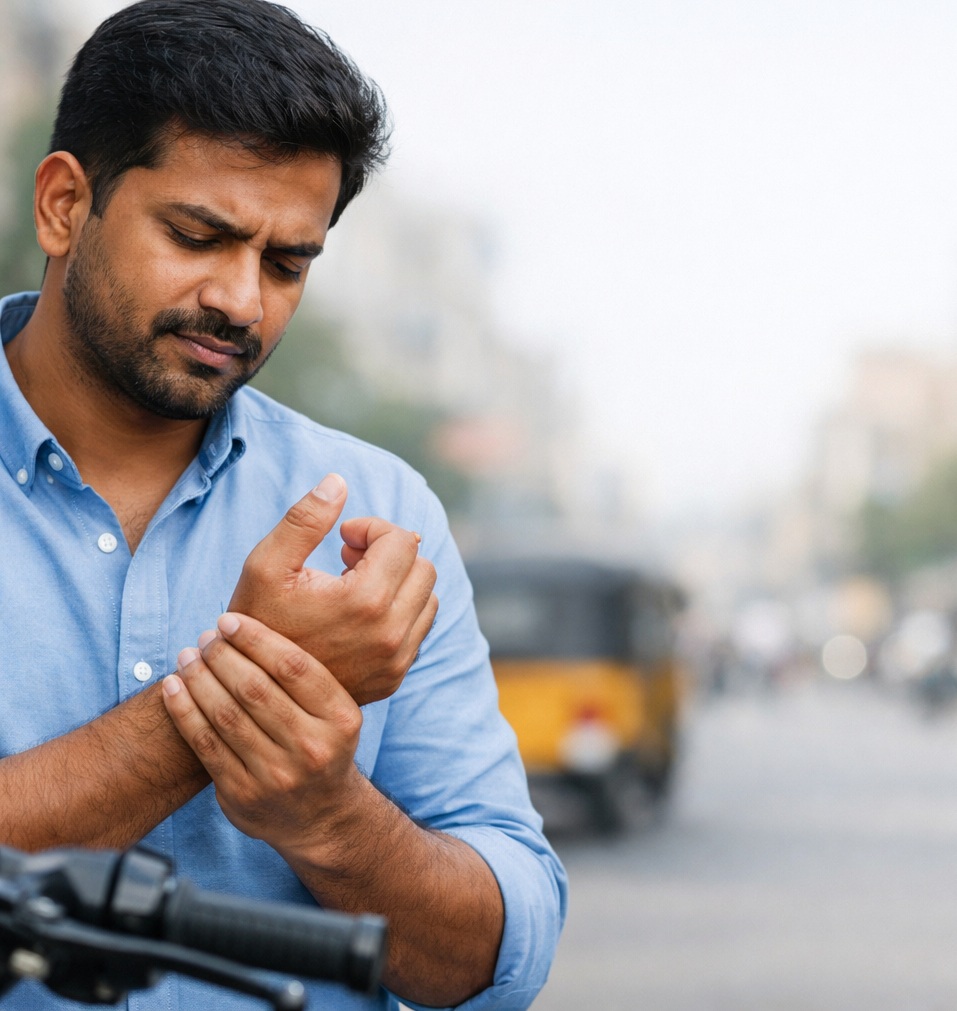
Most people with thumb and wrist pain assume it is early arthritis. In a large proportion of cases, especially in people who ride two wheelers, lift children daily, or do repetitive manual work, it is actually inflamed tendons. The condition has a name, a clear diagnostic test, and a treatment plan that rarely needs surgery.
What it is and why it happens
The thumb moves using two tendons that run in a shared sheath along the thumb side of the wrist. When these tendons are used repeatedly in a gripping, pinching, or twisting motion, the sheath can become tight and inflamed. This is called De Quervain tenosynovitis.
The irritation makes each thumb movement painful because the tendons have to glide through a narrowed, sensitive tunnel.
Many people assume this is a bone problem or early arthritis. In many cases it is a tendon overuse injury. The good news is that tendon irritation responds well to the right conservative care.
Common triggers in daily life
New mothers and childcare
Repeated infant lifting with the thumb extended and wrist bent is a classic trigger. Tendon sensitivity can be higher after delivery, which is why many call it mommy thumb.
Manual work and tool use
Repetitive grasping and twisting during assembly work, carpentry, electrical work, or mechanics can overload the tendon sheath. This is common around the Ambattur Industrial Estate.
Two wheeler commuting
Constant throttle grip, clutch and brake action, and road vibration can aggravate the thumb side of the wrist for commuters from Avadi, Annanur, and Ambattur.
Home and office strain
Wringing clothes, lifting heavy vessels, prolonged phone holding in one hand, and repetitive mouse use can trigger or worsen the same pain pattern.
Typical symptoms
- Pain near the base of the thumb on the thumb side of the wrist.
- Pain that worsens with gripping, twisting, or lifting.
- Swelling or tenderness along the tendon running to the thumb.
- A catching sensation with thumb movement.
- Pain while picking up a child, a bag, or a water bottle.
Quick self check
Ask yourself these four questions.
- Does pain increase when you grip a handle, throttle, or twist a cloth?
- Does pain worsen when you lift a child or a heavy object?
- Is the pain mainly on the thumb side of the wrist rather than across the whole hand?
- Does short rest improve it briefly, but pain returns when you grip again?
If most answers are yes, this is likely a tendon overuse problem. A brief clinical examination is usually all that is needed to confirm it and rule out other causes.
Step by step relief plan
The goal is to calm inflammation, protect the tendons while they settle, then restore strength. Surgery is a last resort for most people.
-
Identify the trigger and modify grip
Reduce repetitive gripping for a short period. Switch hands when possible. For riding, relax the grip and keep the wrist neutral. For childcare, adjust how you lift to reduce thumb load.
-
Ice and short term pain control
Use an ice pack for ten minutes, two to three times daily. Short term medication may be used when needed under clinical advice. Avoid continuous anti inflammatory use without review.
-
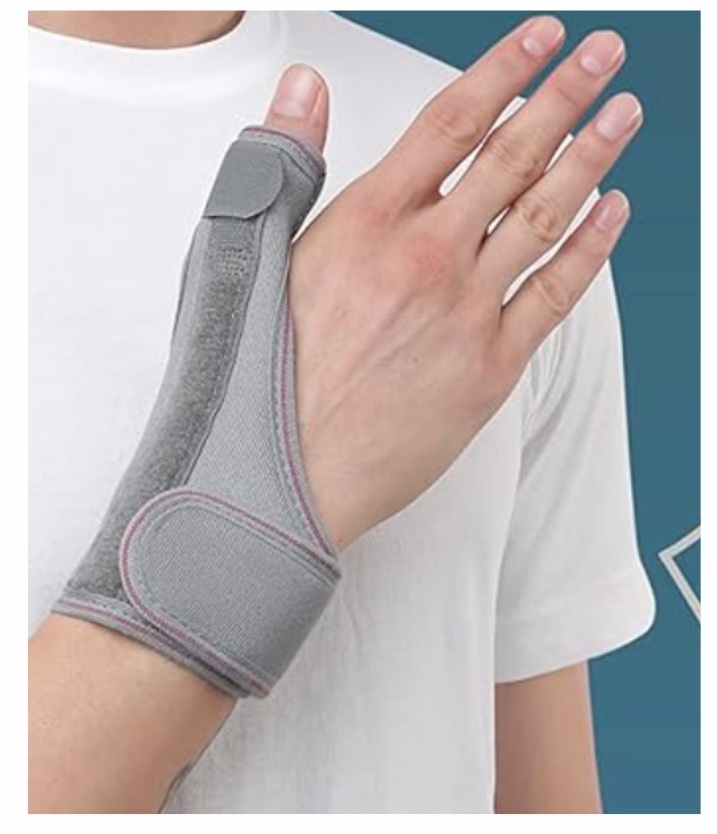
Thumb spica splint
A thumb spica splint rests the thumb and wrist so tendons stop rubbing with every movement. Consistent use during daily activities often makes a big difference.
-
Guided exercises and physiotherapy
Once pain reduces, tendon gliding and progressive strengthening helps prevent recurrence. Our physiotherapy team can build a plan that fits your work and commute. Physiotherapy in Thirumullaivoyal.
-
If pain persists, injection or review
Some patients benefit from a corticosteroid injection into the tendon sheath when splinting and exercises are not enough. Surgery is considered only for rare stubborn cases after adequate conservative care.
Many patients benefit from wearing a thumb spica splint, which immobilizes the thumb and reduces tendon irritation.
When to worry
- Numbness or tingling in the fingers or hand.
- Severe weakness or dropping objects unexpectedly.
- Visible swelling that does not reduce with rest.
- History of fall or injury to the wrist or hand.
- Pain lasting more than two to three weeks despite rest and splinting.
- Night pain that wakes you from sleep.
These features suggest it may not be simple tendon irritation and needs proper assessment to rule out fracture, nerve compression, or other conditions.
What we examine in clinic
Before ordering scans, we use clinical tests to narrow the cause. This saves time and expense and is often enough.
-
Site of tenderness to localize the pain along the thumb side of the wrist.
-
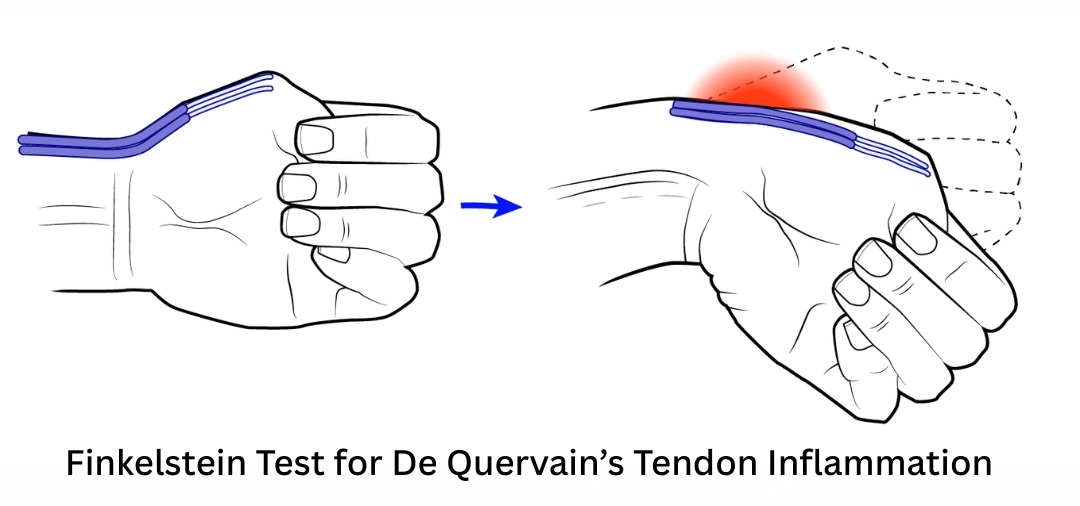
Finkelstein test to stress the De Quervain tendons in a targeted way.
-
Movement assessment comparing thumb and wrist range with the other side.
-
Nerve screening if there is tingling, to check for carpal tunnel or other nerve issues.
-
Imaging only when needed to rule out bone injury. If required, we guide you to an X ray. Digital X ray in Thirumullaivoyal.
We start with a proper examination, a clear explanation, and a practical recovery plan. Conservative care is often enough when it is done correctly and early.
Walk ins welcome. Evening slots and Sunday slots available.