Frozen Shoulder (Adhesive Capsulitis):
Why Night Pain Happens, and How It Gradually Improves
One common reason is frozen shoulder, also called adhesive capsulitis.
Many patients fear one thing most: surgery. The reassuring truth is this. Most cases improve without surgery when managed correctly and patiently.
What it is: A tight inflamed shoulder capsule causing pain and stiffness.
Night pain: Common, and usually improves first with the right plan.
Diabetes link: Higher risk and slower recovery if sugars are uncontrolled.
Surgery: Rare, only after months of proper non surgical care.
At OrthoCure Bone and Joint Speciality Clinic, Thirumullaivoyal, I see patients from Ambattur, Avadi, Annanur, Iyyapakkam, and nearby areas who have been told to “wait it out”. Waiting alone often increases anxiety. A stage based plan is usually more calming and more effective.
What is frozen shoulder?
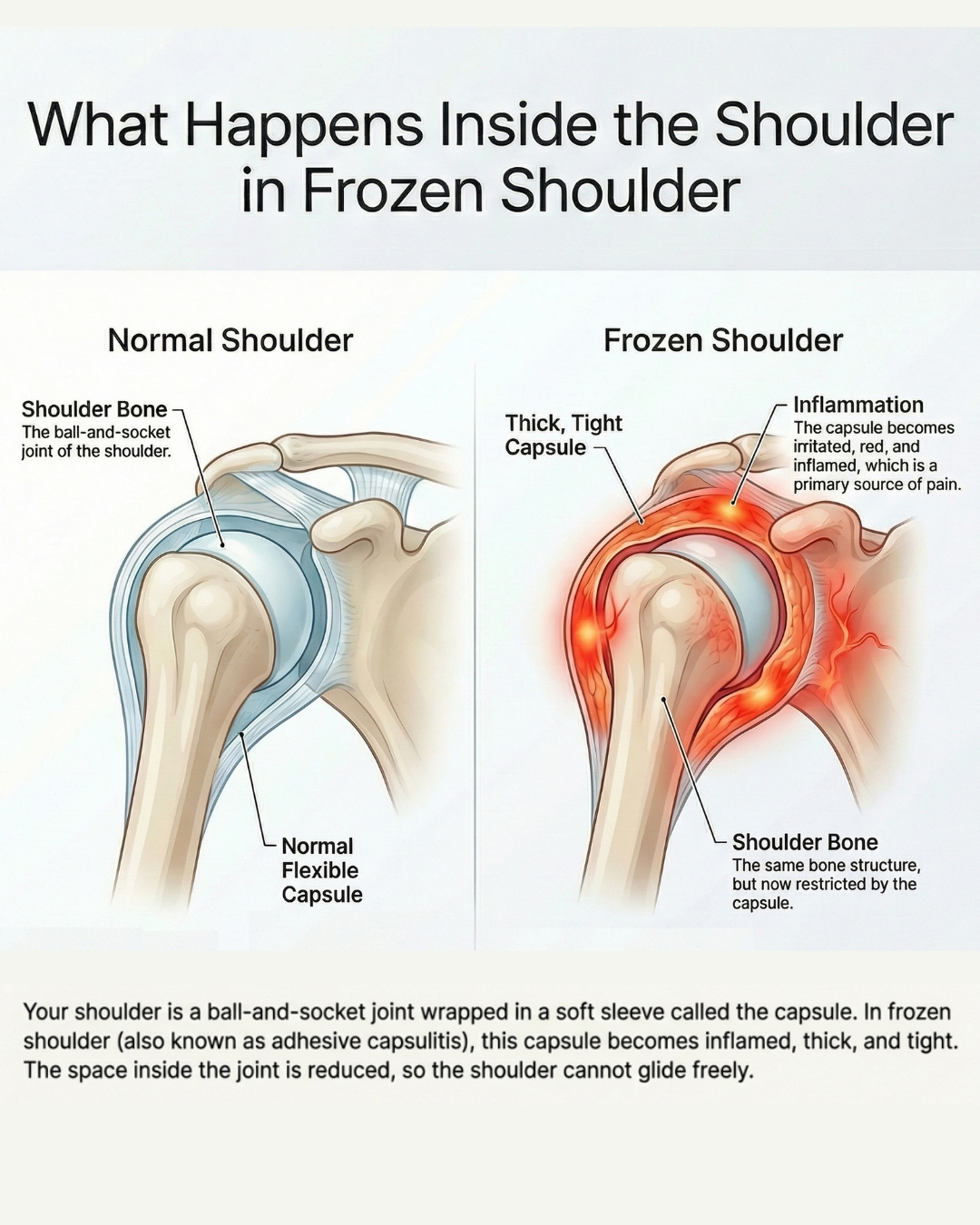
The shoulder is a ball and socket joint wrapped by a soft sleeve called the capsule. In frozen shoulder, the capsule becomes inflamed, thick, and tight. The joint space effectively feels smaller, so the shoulder cannot glide freely.
Why is frozen shoulder worse at night?
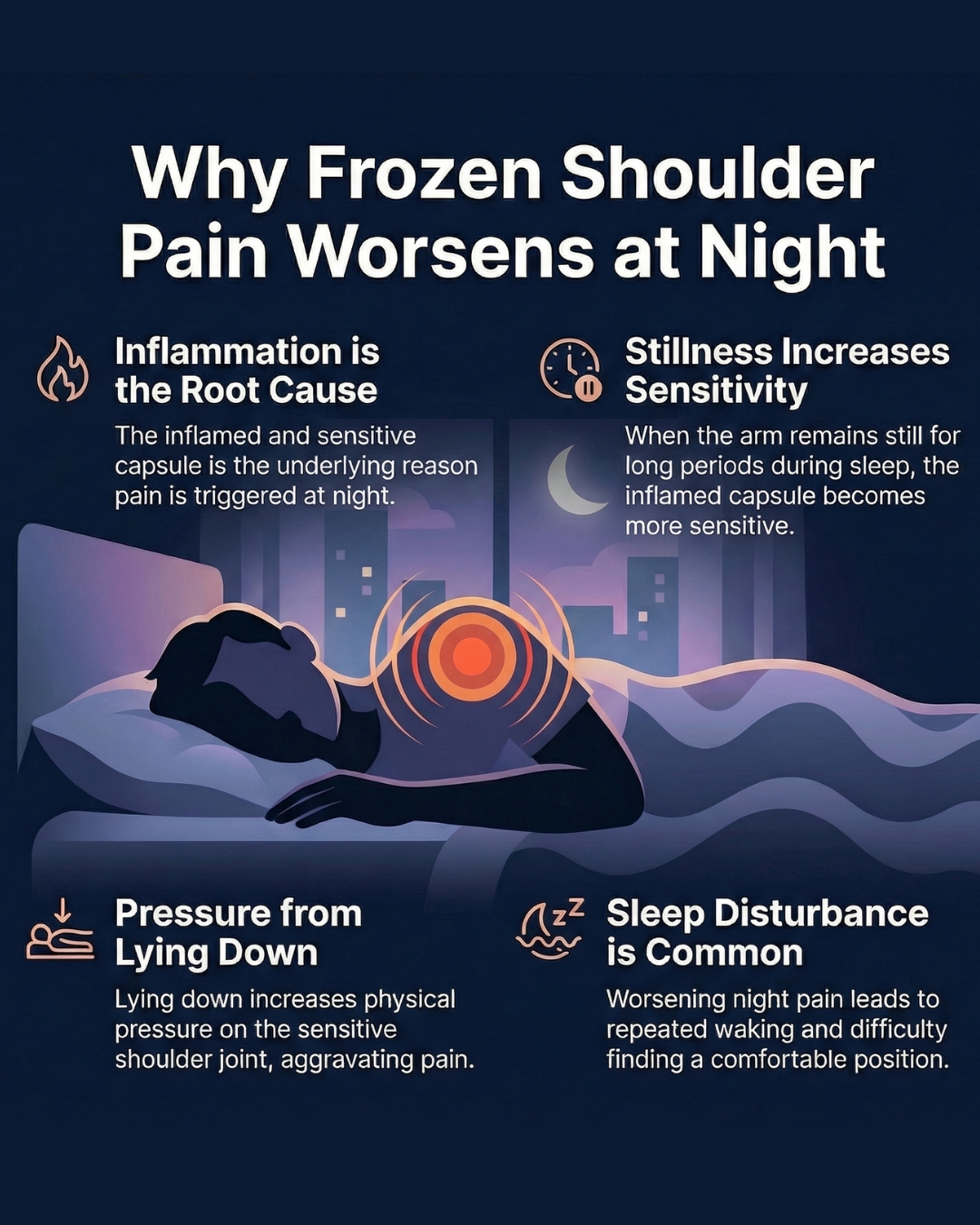
Night pain is a classic symptom. People describe deep aching pain, inability to sleep on the affected side, and repeated sleep breaks.
What is happening inside the shoulder?
When the arm stays still for long periods, the inflamed capsule becomes more sensitive. Lying down can increase pressure around the shoulder, especially if you roll onto that side. That is why night pain can feel worse even when daytime pain seems tolerable.
Who gets frozen shoulder, and why does diabetes matter?
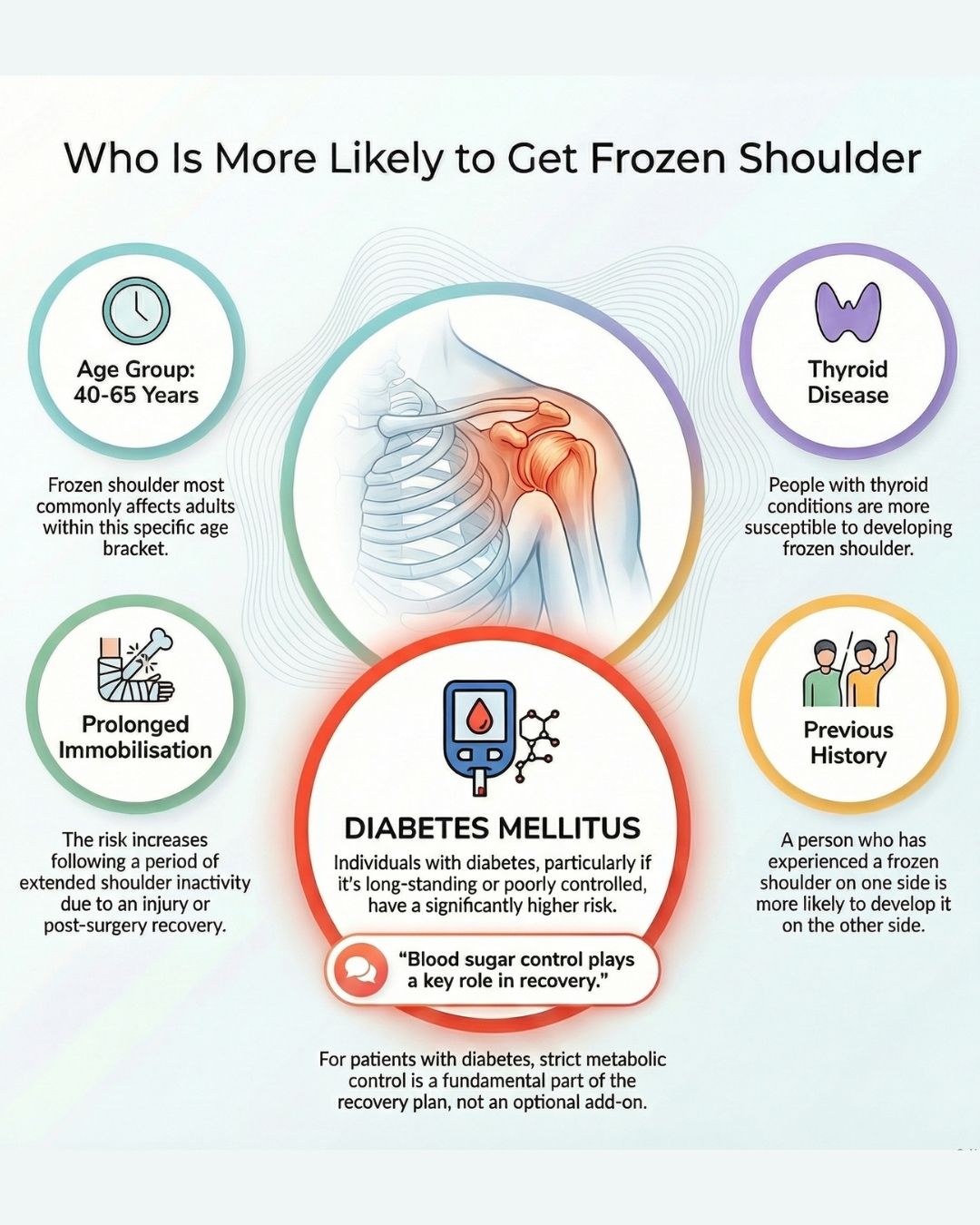
Frozen shoulder can affect anyone, but these factors increase risk:
- Age between 40 and 65 years
- Diabetes mellitus, especially long standing or poorly controlled
- Thyroid disease
- Prolonged immobilisation after injury or surgery
- Previous frozen shoulder on the other side
For diabetic frozen shoulder, sugar control is part of treatment. If sugars are running high, the capsule tends to stay irritable longer, and stiffness can linger.
Stages and a realistic timeline: what to expect
Frozen shoulder usually progresses through three overlapping stages. Knowing your stage prevents panic and prevents forcing the wrong exercise at the wrong time.
| Stage | What you feel | What usually helps most |
|---|---|---|
| Freezing | Increasing pain, strong night pain, stiffness slowly builds | Pain control first, gentle movement only |
| Frozen | Pain may reduce, stiffness feels dominant, daily tasks become difficult | Consistency with stretching and guided exercises |
| Thawing | Pain stays low, movement improves gradually over months | Progressive strengthening and functional recovery |

One common mistake: forcing stretches too early
Aggressive stretching during the painful freezing stage can flare inflammation and increase night pain. The right plan matches the stage, not just the scan.
How do we confirm the diagnosis?
Frozen shoulder is mainly a clinical diagnosis. In true frozen shoulder, both active movement and passive movement are limited in more than one direction.
- Clinical exam to confirm global restriction with a firm end feel
- X ray to rule out arthritis or bone causes of pain
- Ultrasound or MRI only if another issue is suspected, for example rotator cuff tear
- Blood tests sometimes for diabetes and thyroid status
Useful links: Physiotherapy and Digital X ray.
Non surgical treatment: what actually works
Most patients improve with a conservative stepwise plan. The priorities are pain control, safe range of motion, and gradual return of function.
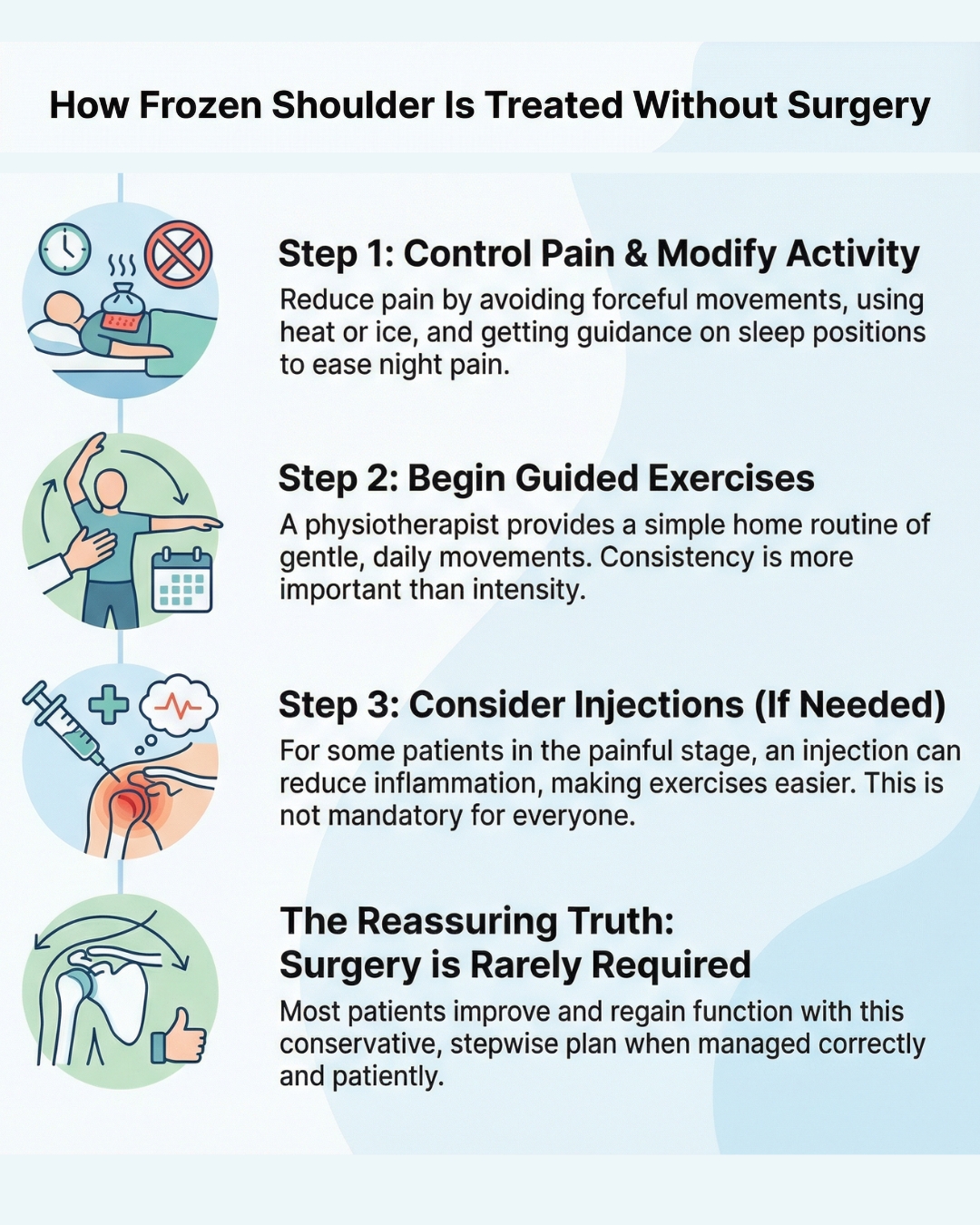
Step 1: Pain control and smart activity changes
- Avoid painful end range forcing
- Use heat or ice based on comfort
- Short safe medicines when appropriate
- Sleep position guidance to reduce night pain
Step 2: Guided physiotherapy and a simple home routine
Random exercises from the internet often fail because they ignore stage and technique. A simple routine done daily usually beats occasional intense sessions.
Step 3: Injections for selected patients
In selected cases, an injection can reduce capsule inflammation and make exercises easier, especially in the painful stage. It is not mandatory for everyone, and it is never a stand alone fix.
When is surgery considered?
Surgery is considered only when clear criteria are met, usually after months of proper conservative care.
- Severe stiffness persists despite supervised therapy and a good home routine
- Daily function remains significantly limited
- Other causes have been assessed and addressed
Simple truth
Most patients do not need surgery. The goal is the right plan at the right time, not the fastest plan.
Frequently asked questions
Can frozen shoulder affect both shoulders?
Yes. Many people start with one side and later develop similar symptoms on the other side, especially in diabetes. Early guidance and consistency reduce severity.
Will my shoulder become completely normal again?
Many patients regain near normal function for daily life. Some may have mild limitation at extreme end range, which often does not affect routine tasks.
What if I cannot attend regular physiotherapy sessions?
A well taught home plan with periodic reviews can still work well. The key is correct technique, consistency, and stage appropriate progress.
When should I see an orthopaedic doctor?
If pain disturbs sleep, movement is steadily reducing, symptoms persist beyond a few weeks, or you have diabetes with shoulder stiffness, it is safer to get assessed early.
Need a personalised frozen shoulder plan in Thirumullaivoyal?
If shoulder pain and stiffness have lasted more than four to six weeks, especially with diabetes or thyroid disease, get a structured plan instead of waiting and worrying.
At OrthoCure Bone and Joint Speciality Clinic, Thirumullaivoyal, we focus on conservative stage based recovery and avoid unnecessary procedures.
No. 2, 2nd Street, Santhipuram, Thirumullaivoyal, Chennai 600062
Serving Thirumullaivoyal, Ambattur, Avadi, Annanur, Iyyapakkam, and nearby areas.