What Is a Stress Fracture
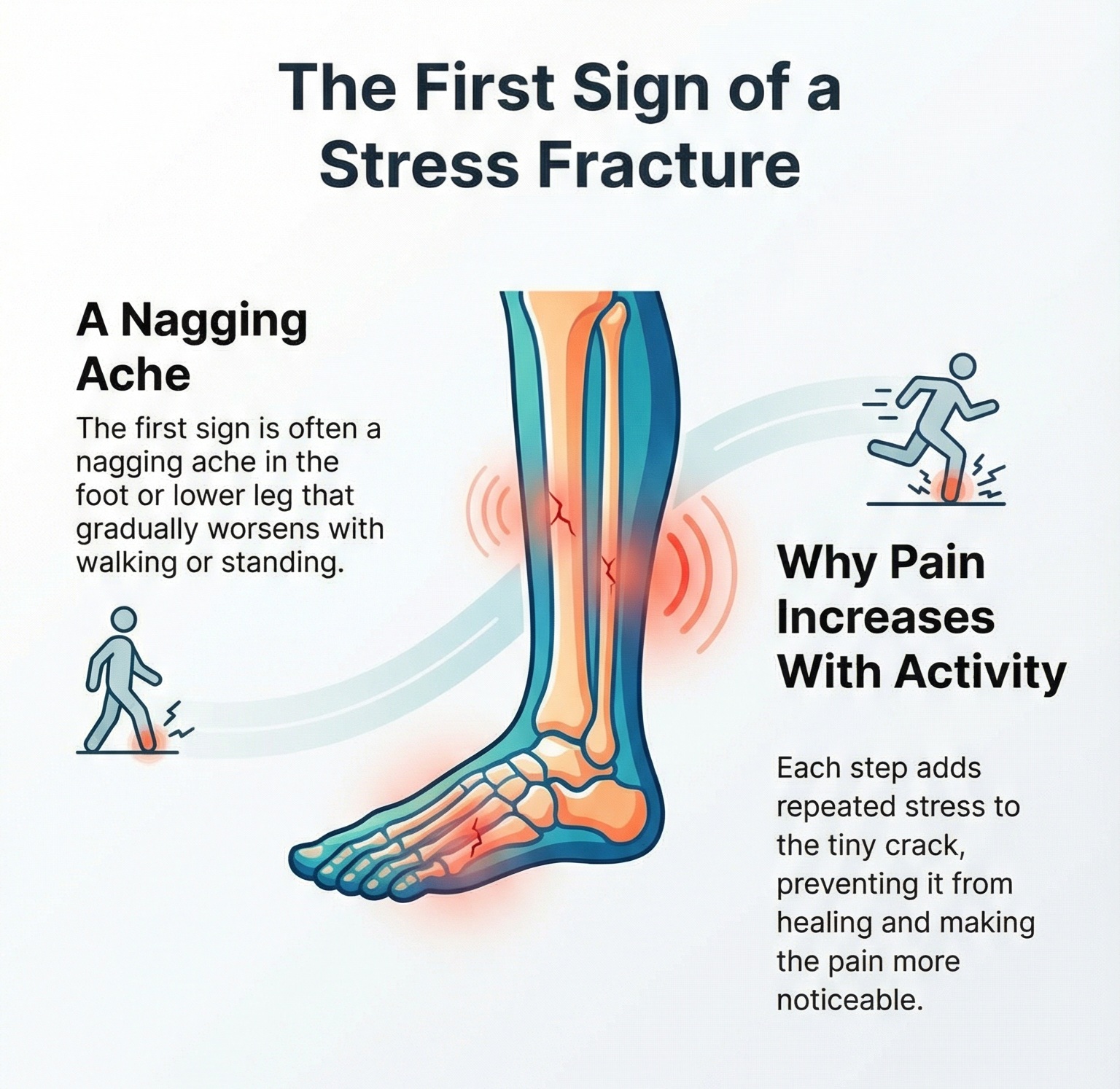
A stress fracture is a small crack in the bone caused by repeated stress over time rather than a single fall or accident. Bone is living tissue. It repairs itself every day. When the load on the bone increases faster than its capacity to repair, tiny cracks appear. If this continues, the crack becomes deeper and more painful.
Stress fractures affect weight bearing bones most often, such as:
- Metatarsals in the foot
- Tibia in the leg
- Heel bone
- Hip region in active adults and older adults
- Navicular bone and other midfoot structures
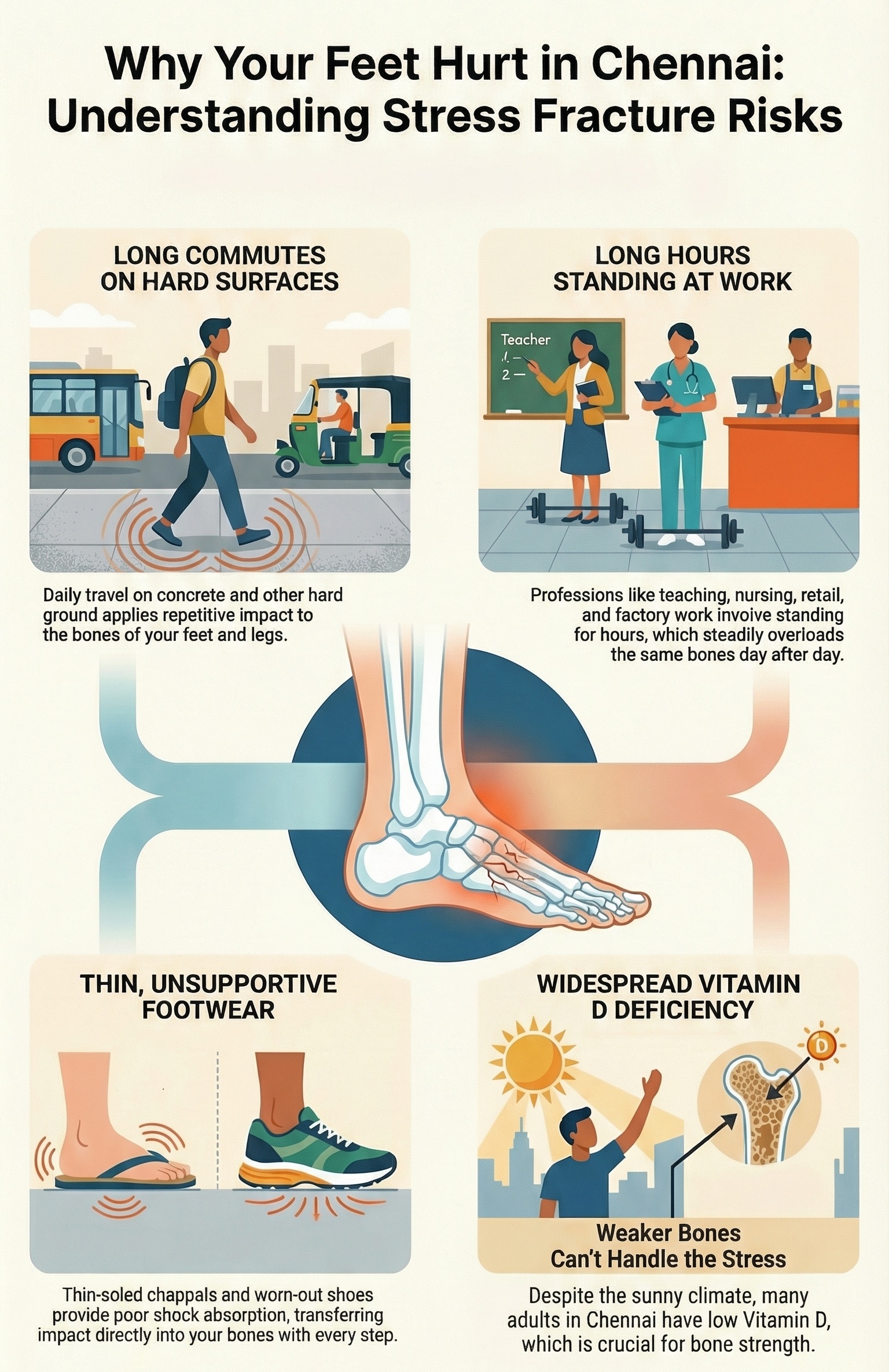
For Chennai residents, long commutes on hard surfaces, standing jobs, thin footwear, and common vitamin D deficiency together create the perfect environment for these injuries.
How Stress Fractures Actually Start
Tiny cracks form long before the real pain begins.
Sudden jump in activity
A new fitness routine, extra morning walks, unplanned long distance travel, or marathon practice can overload bones that are not yet conditioned. Muscles tire, bone takes more load, and microdamage starts.
Weak bones or low vitamin D
Many people in Chennai have low vitamin D and reduced bone strength despite living in a sunny climate. Softer bone bends a little with each step. This increases stress inside the bone and encourages microcracks.
Repetitive impact every day
Teachers, nurses, factory workers, sales staff, delivery workers, and security staff stand or walk for many hours on hard flooring. Each step adds a little more stress to the same area of bone.
Poor cushioning and footwear
Thin chappals, worn out soles, and hard concrete floors do not absorb shock. Over time, the impact transfers directly into the bone of the foot and leg.
Ignoring early warning signs
Many people push through mild pain. They adjust their gait, change footwear, or take over the counter pain tablets and continue walking. During this period the crack silently extends.
Signs of a Stress Fracture in the Foot or Leg
Stress fracture pain has a characteristic pattern. Watch for these signs:
- Pain that worsens with walking or standing and settles with rest
- Pain focused at a small, specific spot on the bone rather than a wide area
- Local tenderness when you press that point
- Mild swelling or warmth over the painful region
- Sharp pain when you hop on the same leg
- Pain that starts earlier in the day as days go by
When pain that used to come only at the end of the day appears within a few steps in the morning, it often means the crack has progressed.
Who Is At Higher Risk
In our clinic at Thirumullaivoyal, stress fractures are especially common in these groups:
- Women with vitamin D or calcium deficiency
- Adults above forty with lower bone density
- People who suddenly increase walking, jogging, or gym activity
- Standing job professionals such as teachers, nurses, and retail staff
- People with previous fractures or known osteoporosis
If you belong to one of these groups and you have localised pain that worsens on weight bearing, it is safer to rule out a stress fracture early.
How We Confirm The Diagnosis
In the first few days, standard digital X ray images often look normal even when a stress fracture is present. This can be misleading and is one reason people are reassured too early.
When we suspect a stress fracture, assessment may include:
- Clinical examination to localise the painful point and assess bone and soft tissue
- X ray to look for cracks, callus formation, or other causes of pain
- MRI when early confirmation is needed, especially in the hip or complex foot bones
- Vitamin D and calcium tests if bone quality is a concern
- Bone density scan in adults with repeated fractures or higher risk
The goal is simple. Confirm the diagnosis early so you can protect the bone before the crack deepens.
If your foot or leg pain has continued despite a normal X ray, a focused review at OrthoCure Bone and Joint Speciality Clinic in Thirumullaivoyal can clarify whether this is a stress fracture and help prevent progression.
Treatment And Healing For Stress Fractures
The good news is that most stress fractures heal very well when treated early and protected properly. Surgery is rarely needed unless the crack is in a higher risk location or has progressed to a complete break.
Treatment usually focuses on three areas:
-
Reducing load on the bone
Temporary rest from high impact activity, use of supportive footwear or braces, and in some cases walking aids to offload the painful region. -
Improving bone health
Vitamin D and calcium correction when required, assessment for osteoporosis in older adults, and planning long term bone protection. -
Guided return to activity
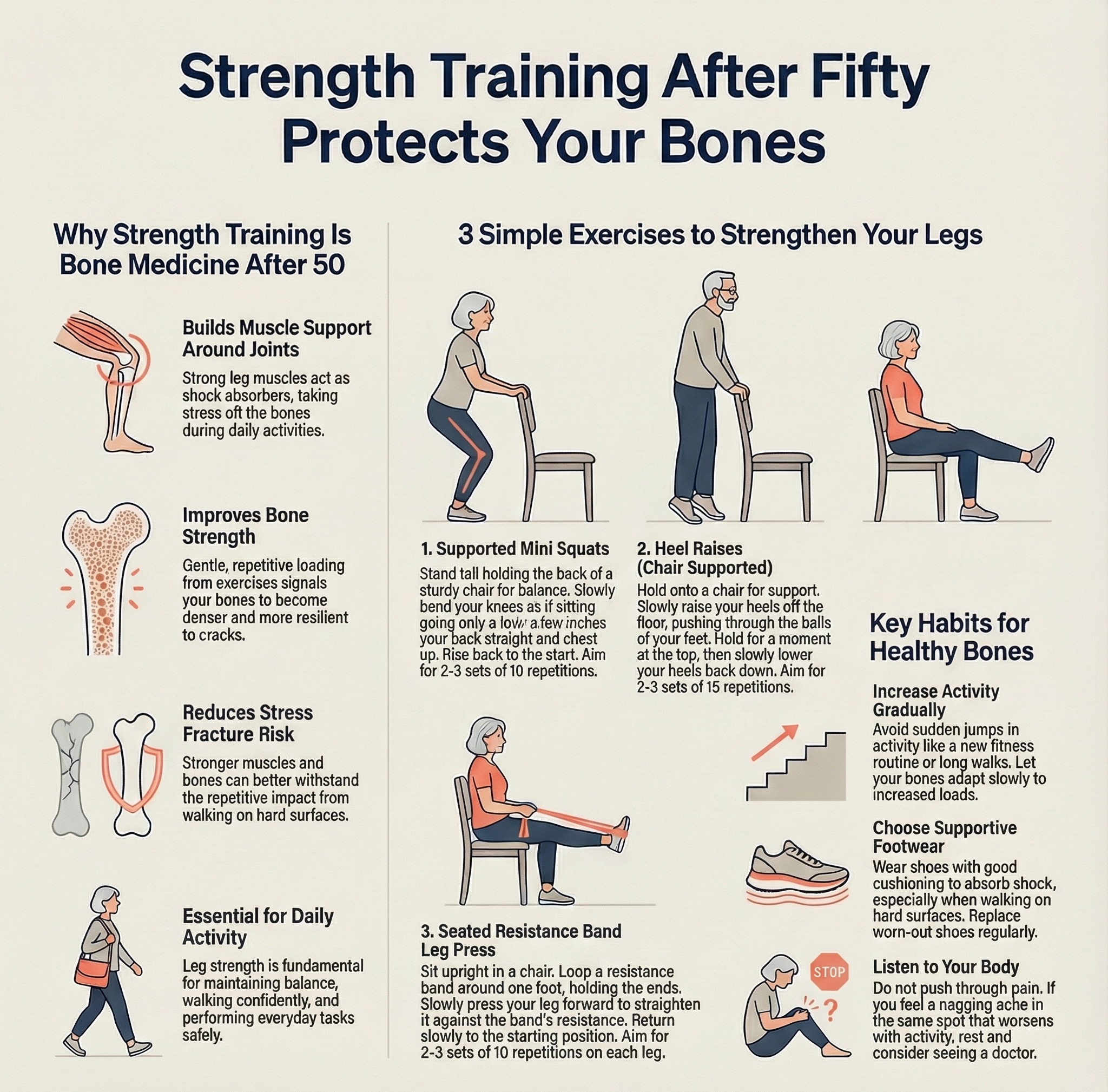
Gradual strengthening and flexibility work so that muscles share the load, followed by a step wise return to walking, jogging, or sport. Our physiotherapy team can guide this process.
Healing time varies from six to twelve weeks depending on the bone involved and how early treatment is started.
Simple Prevention Steps For Daily Life
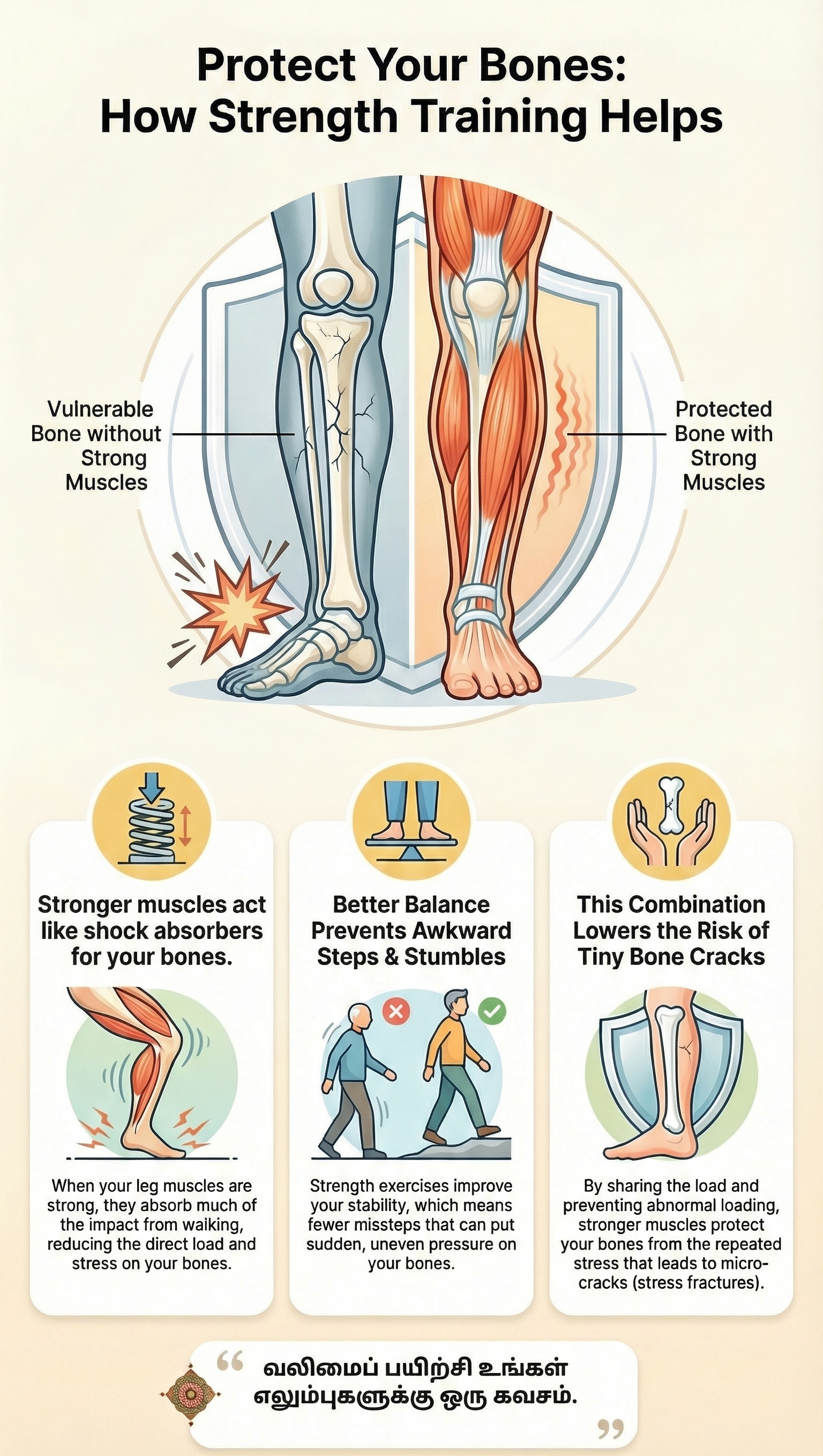
Stress fractures are often preventable. Stronger bone and smarter loading reduce your risk significantly.
- Build strength in the legs and hips with simple exercises two or three times a week.
- Work on balance so that missteps and abnormal loading are less likely.
- Replace worn out footwear and avoid very thin soles on hard floors.
- Increase activity gradually rather than jumping suddenly to long distances.
- Check vitamin D and bone density if you are over fifty or have had previous fractures.
- Listen to pain signals that repeat at the same spot when you walk or jog.
For a deeper look at bone health in later years, you can also read our guide on bone health after fifty for Chennai residents.
When Should You See An Orthopaedic Doctor
Do not wait for severe pain. You should consider a consultation if:
- Pain in the foot or leg worsens with walking for more than five to seven days
- The pain is sharply localised to one point on the bone
- You find it painful to hop or stand on that leg alone
- There is swelling without any clear injury
- You are over forty and your bone density is already low
A short visit can clarify whether this is a simple strain, a stress fracture, or something else. Early clarity means a faster and safer recovery.
Why OrthoCure Is A Good Place To Manage Stress Fractures
At OrthoCure Bone and Joint Speciality Clinic, Thirumullaivoyal, the focus is not only on healing the current crack but also on protecting your bone for the long term.
- Detailed clinical examination and risk assessment
- Guidance on which investigations are truly needed
- Evidence based treatment plans tailored to your lifestyle
- Advice on footwear, workplace changes, and home surfaces
- Bone health optimisation for adults above forty and postmenopausal women
- Clear follow up schedule so you know when it is safe to return to full activity
Explanations are kept simple and honest so that you understand your condition and feel confident about your recovery plan. Learn more about our fracture care service in Ambattur and nearby areas.
Frequently Asked Questions
How do I know if my foot pain is a stress fracture
Pain that increases with walking, settles with rest, and is sharply focused at one small point on the bone is a common pattern. If the same spot hurts every time your foot takes weight, stress fracture is one possibility and it is better to get it examined.
Can a stress fracture be present with a normal X ray
Yes. In the first ten to fourteen days, X rays may appear normal. Clinical examination and sometimes MRI are needed if suspicion is high and pain continues.
How long does a stress fracture take to heal
Healing usually takes six to twelve weeks, depending on the bone involved, your bone health, and how early you start treatment. Protective loading and bone support are important during this period.
Is complete bed rest needed for stress fractures
Complete bed rest is rarely needed. Most patients need to reduce impact on the affected bone, avoid long walks, and use supportive footwear or braces while staying active in other safe ways as advised.
Persistent Foot Or Leg Pain With Walking
A clear diagnosis today can prevent a larger fracture later. No unnecessary tests and no guesswork. Just a careful examination and an honest plan.