Leg Pain That Travels Down the Leg
Short Answer
Leg pain that travels down the leg is commonly called sciatica. In most people, it does not require surgery and improves with conservative care such as physiotherapy, activity modification, and time.
If pain is affecting your work or walking, start with a structured plan and guidance. You can read about physiotherapy in Thirumullaivoyal here.
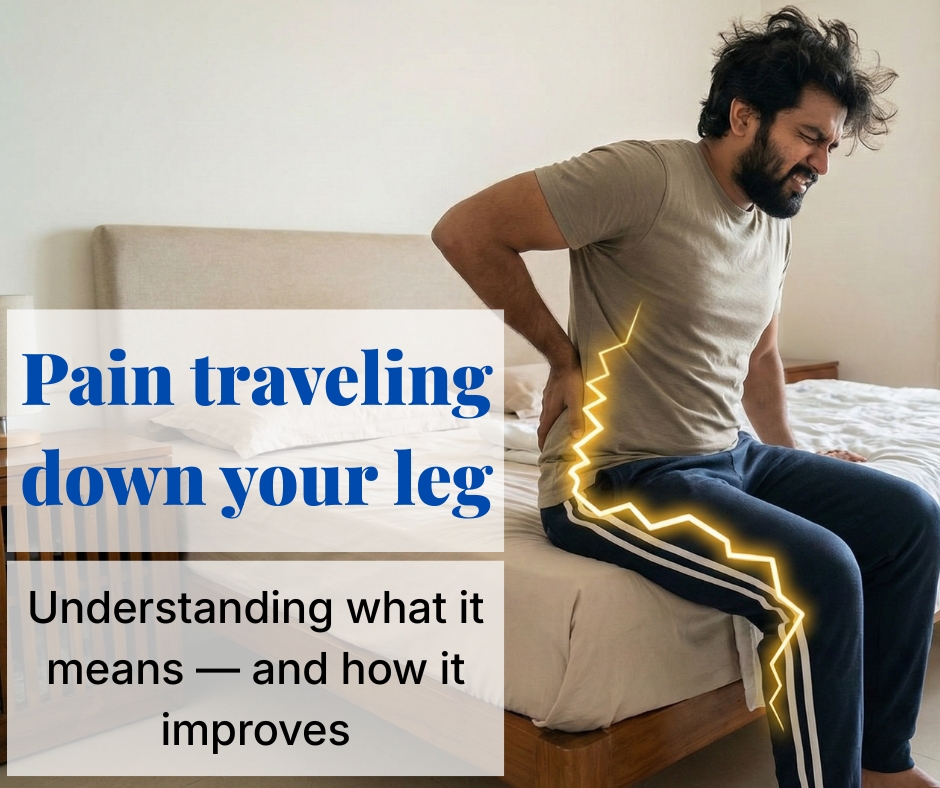
Electric pain down the leg often creates fear about surgery.
Most cases improve with conservative care when assessed properly.
To help you understand what matters, what to ignore, and what to do next.
Who this guide is for
- Two wheeler commuters who notice leg pain after riding on uneven roads
- Factory and standing job workers with back and leg strain through the week
- Desk workers who develop leg pain after long sitting
What Sciatica Means
Sciatica is a symptom, not a diagnosis. It describes pain that travels along the sciatic nerve, which runs from the lower back into the leg.
Some people have true nerve root irritation from the lower back. Others have pain that mimics sciatica due to hip and buttock muscle tightness. The right treatment depends on which pattern you have.
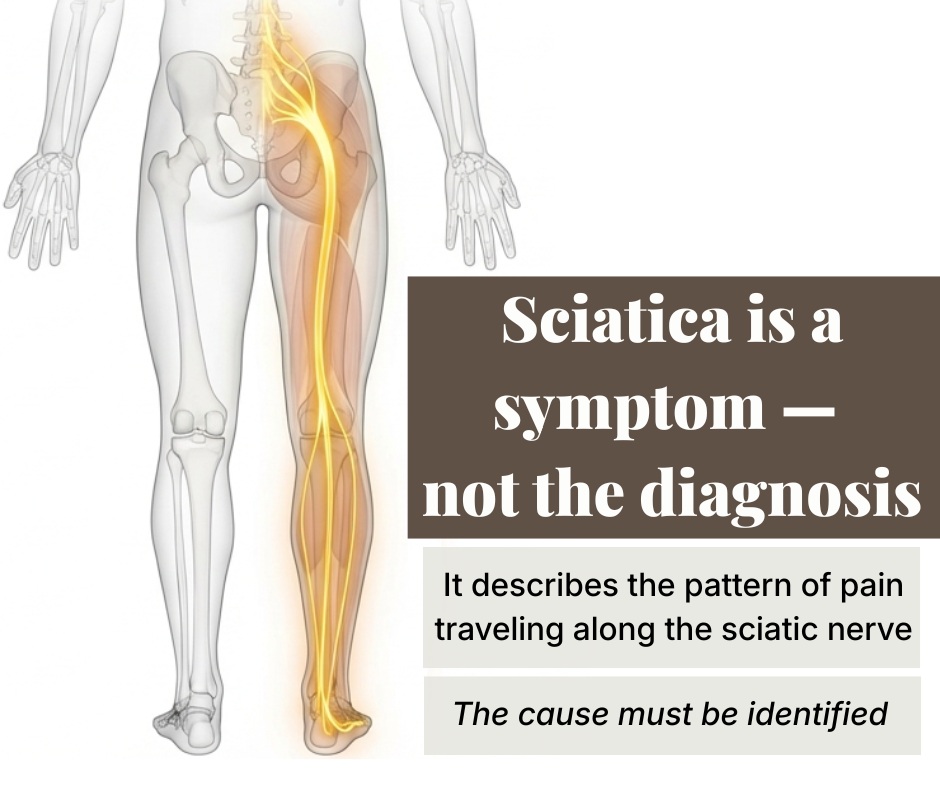
Local pattern you may relate to
If pain increases after riding, read: Bikers back pain: muscle strain or sciatica.
Common Causes in Our Area
- Lumbar disc irritation with nerve inflammation
- Piriformis muscle tightness causing symptoms that look like sciatica
- Prolonged sitting with poor hip mobility
- Weak core and poor movement control
"Most patients who come fearing spine surgery recover without it. The key is matching symptoms with examination, not chasing scan reports." Dr Sumesh Subramanian
A useful next step
If you are unsure how to start safely, this page explains what physiotherapy focuses on and how it is planned: physiotherapy in Thirumullaivoyal.
Scan Confusion and When It Helps
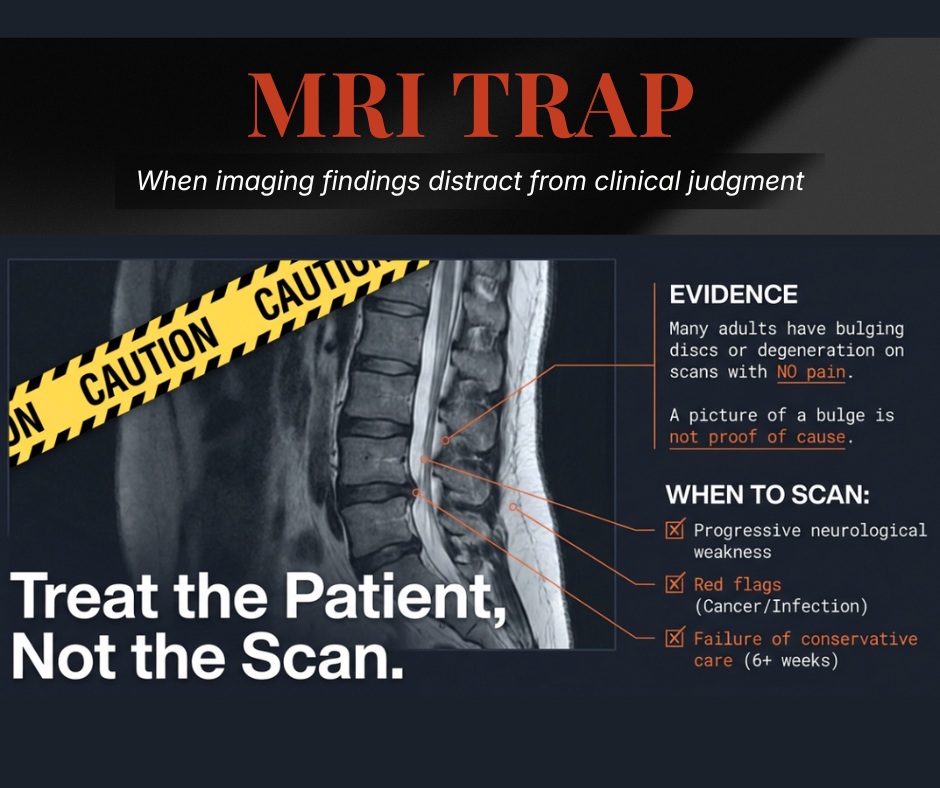
Many people panic when they see terms like disc bulge or disc protrusion in a report. Imaging findings must match your pain pattern and your clinical examination. Disc changes can also appear in people who have no pain at all.
When imaging is genuinely helpful
- Symptoms persist despite structured conservative care
- Weakness is progressive or neurological signs are concerning
- We need to rule out uncommon causes based on your examination
If imaging is required during evaluation, you can see: Digital X ray in Thirumullaivoyal.
Stepwise Conservative Plan
The goal is not bed rest. The goal is safe movement, reduced irritation, and gradual rebuilding of strength.
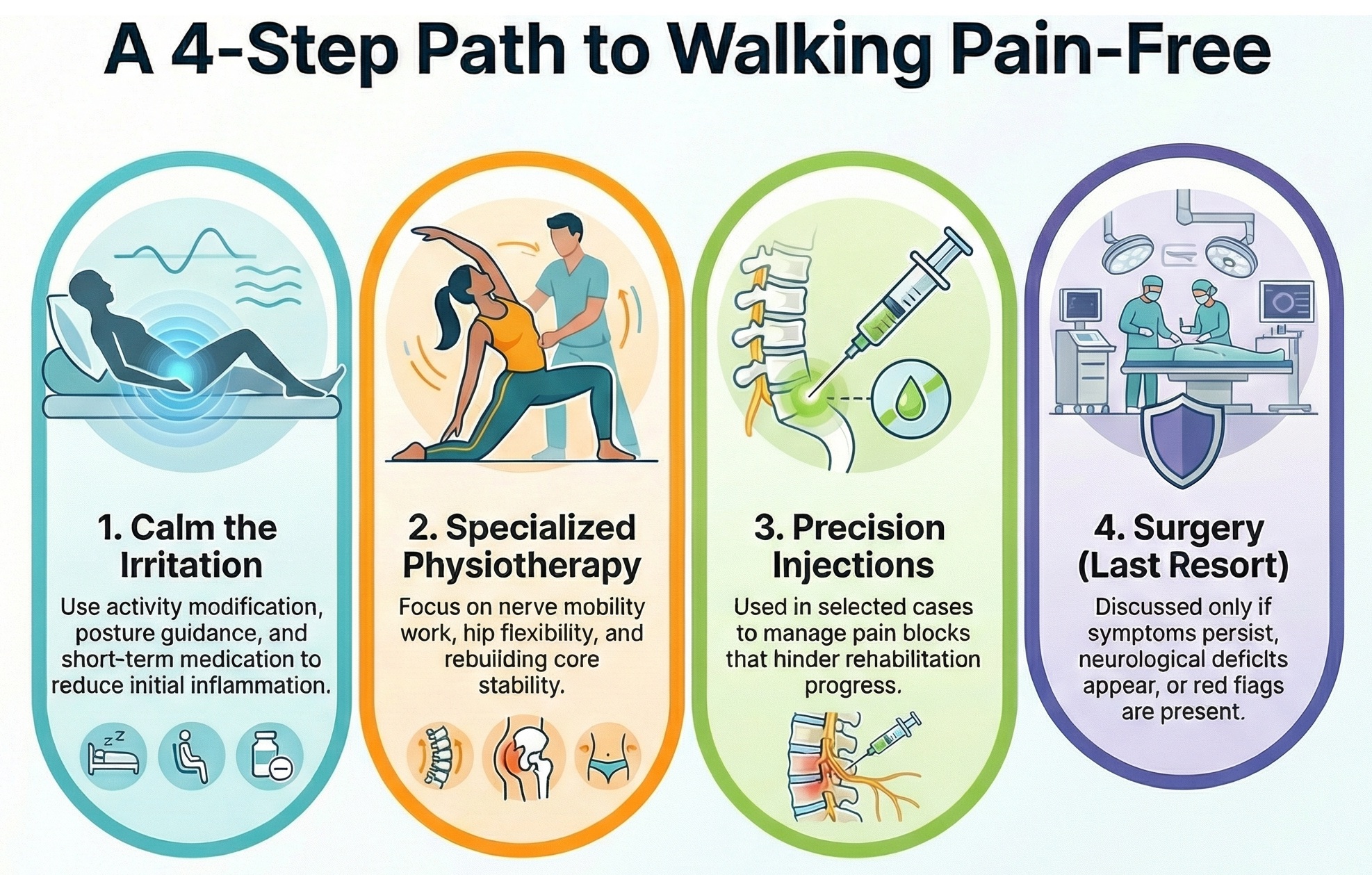
Activity modification, posture guidance, and short term medication if needed.
Nerve mobility work, hip flexibility, and core stability. See physiotherapy in Thirumullaivoyal.
Selected cases only, usually to help you continue rehabilitation when pain blocks progress.
Discussed only when symptoms persist, neurological deficits appear, or red flags are present.
- International evidence from the Lancet Low Back Pain Series supports conservative care as the first line for most low back pain and sciatica patterns.
- Research in the American Journal of Neuroradiology shows that disc findings on imaging can occur in people without pain, which is why correlation is essential.
- Guidance from NICE and NASS supports conservative care first, with escalation only when medically necessary.
When Urgent Care Is Needed
Red flags
- Sudden weakness, foot drop, or progressive weakness
- Numbness in the groin region
- Changes in bladder or bowel control
If these occur, do not self treat. Get evaluated urgently.
Patient Questions
Does leg pain always mean a slipped disc?
No. Muscle tightness, hip irritation, posture issues, and prolonged sitting can cause leg pain without a dangerous disc problem.
Is sciatica a diagnosis?
Sciatica is a symptom. The underlying cause needs clinical assessment.
Do I need an MRI?
Not always. MRI is considered when symptoms and examination suggest nerve compression, or when symptoms persist despite structured conservative care.
Can sciatica recover without surgery?
Yes. Most cases improve with physiotherapy, graded activity, posture correction, and time.
What is the best first treatment for sciatica?
The best first treatment is conservative care, including physiotherapy, activity modification, posture correction, and time. Surgery is reserved for selected cases with persistent symptoms or neurological deficits.
What is piriformis syndrome?
Piriformis syndrome is irritation of the sciatic nerve by a tight buttock muscle. It can mimic sciatica and usually improves with physiotherapy.
Key Takeaways
- Sciatica is a symptom, not a diagnosis.
- Most leg pain improves without surgery.
- Scan findings must match symptoms and examination.
- Physiotherapy and safe movement are central to recovery.
- Red flags require urgent medical attention.
Leg Pain Affecting Walking or Work?
A calm assessment can clarify the source and give you a stepwise plan. Most cases are managed without surgery.
Consult with Dr Sumesh Subramanian at OrthoCure Bone & Joint Speciality Clinic, Thirumullaivoyal.
Clinic hours: Monday to Saturday 5:00 PM to 9:00 PM. Sunday 11:00 AM to 1:00 PM.
No. 2, 2nd Street, Santhipuram, Thirumullaivoyal, Chennai 600062.