
What makes gym injuries different from other pain
A road accident produces a clear injury with a clear moment. Gym injuries are more complicated. The joint is loaded repeatedly — squats, presses, deadlifts, rows — and over time, if load exceeds the body's capacity to recover, breakdown begins quietly. The pain is not sudden. It is cumulative.
This is why early symptoms get dismissed. The session ends, the ache fades, training resumes. The cycle continues until the tissue has less reserve, pain starts earlier, and recovery takes longer. By the time someone comes in for evaluation, the problem that started months ago has layered into something more persistent.
5 habits that silently damage your joints
Ego lifting
Loading more weight than the body is prepared to handle is the most common pattern. Muscles fatigue under excessive load, and compensatory stress shifts to the joints — the knees during squats, the lower back during deadlifts, the shoulder during pressing movements. Strength builds in weeks. Joint damage recovers in months. That mismatch is the problem.
Poor form under fatigue
Form breaks down when the body is tired. A rounded lower back in the last sets of a deadlift, knees collapsing inward during a squat, shoulder blade losing control during a press — these are common. Each repetition with compromised mechanics places abnormal load on a specific joint surface. Repeated hundreds of times across a training cycle, this accumulates significantly.
Ignoring early pain signals
Pain that appears consistently during one movement, or that is still present 48 hours after training, is not something to train through. Early symptoms are often the body's first signal before the problem becomes structural. Ignoring them routinely delays the point at which the injury is still easy to manage.
Insufficient recovery between sessions
Tendons and cartilage adapt far more slowly than muscle. A programme that increases volume quickly without adequate rest does not give connective tissue time to remodel and strengthen. This is how overuse injuries develop — not from one session, but from repeated loading without sufficient recovery between cycles.
Rapid progression without structured guidance
Starting gym training without a structured plan, or rapidly increasing load based on what others are doing rather than what the body can currently handle, is a common pattern. Beginners are particularly vulnerable in the first three to six months, when enthusiasm often outpaces tissue readiness.

Which joints are most commonly affected
Shoulder
The rotator cuff — four muscles and tendons that stabilise the shoulder — is under significant stress during overhead pressing, lateral raises, and pull movements. Poor scapular control, tight shoulders, or progressing too quickly in pressing volume can lead to rotator cuff irritation or partial tears. These typically present as pain during shoulder-height or overhead movements, and are sometimes felt at night.
If you are already experiencing shoulder pain with movement or at rest: Shoulder pain and stiffness — understanding frozen shoulder.
Knee
Squats, leg press, and lunges done with excessive load, poor depth control, or inward knee collapse put abnormal stress on the kneecap joint and the menisci. Knee pain that appears hours after a session, or is worst when climbing stairs or standing from a low seat, is a common gym-related presentation.
For more on this pattern: Knee pain on stairs and chair rise — what it means and what helps.
Lower back
Repeated deadlifts or rows with a flexed lumbar spine — especially under fatigue — place significant compressive forces on the intervertebral discs and facet joints. Lower back tightness after sessions that progressively takes longer to settle is an early warning sign worth addressing before it develops into a disc problem.
For lower back pain related to repetitive activity and commuting: The biker's back — muscle spasm or disc issue?
Warning signs that need evaluation
Not every gym-related pain requires immediate review. But the following signs should prompt a clinical assessment rather than continued training:
- Pain that persists beyond 3 to 5 days after training and does not settle
- Swelling in or around a joint after sessions
- A sensation of instability, giving way, or locking
- Pain that now affects daily activities, not only gym sessions
- Night pain in the shoulder, knee, or hip that disrupts sleep
- A sudden sharp pain or pop during a session with rapid swelling after
A sudden pop with rapid swelling and loss of function — particularly in the knee — needs urgent review and should not be dismissed as a simple sprain.
What can be done early
Most gym-related joint problems, when identified before structural damage has occurred, can be managed without surgery. The key is addressing both the symptom and the underlying loading cause. If pain has started after a recent session, the PEACE and LOVE protocol explains what to do in the first days after a soft tissue injury.
Reduce load, but stay active
Complete rest is rarely the right answer. Reduce the specific movements causing stress while maintaining overall conditioning. A rotator cuff irritation does not mean stopping all training — it means modifying pressing movements while the problem settles.
Correct the technique
Understanding why the injury developed is essential to preventing recurrence. This often means reviewing form on the specific exercises causing the problem, addressing muscle imbalances, and rebuilding the movement pattern with appropriate load.
Guided physiotherapy
Specific strengthening of the muscles supporting the affected joint, movement correction, and progressive return to training is the most reliable route back to full gym activity. Physiotherapy at OrthoCure, Thirumullaivoyal.
Imaging when it changes the plan
An X ray or MRI is useful when the clinical picture is unclear, when a significant acute injury has occurred, or when symptoms are not improving after structured conservative care. Most early overuse problems do not need imaging to begin management.
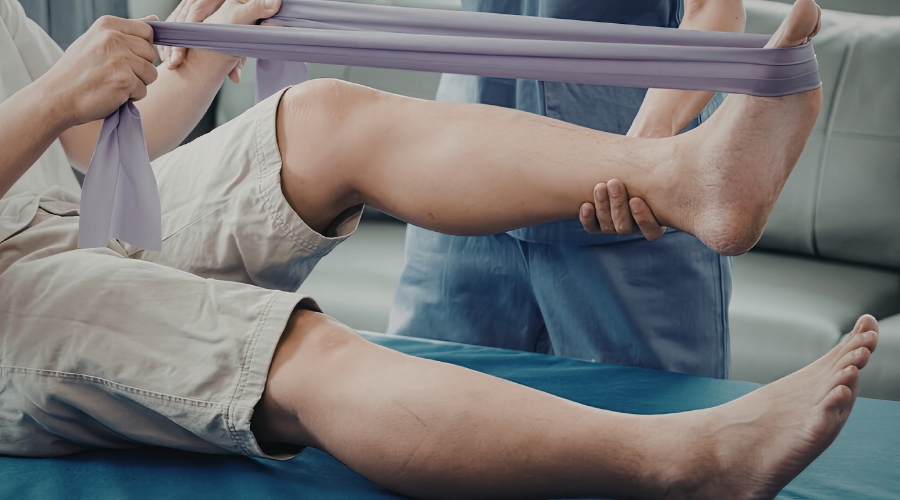
Note: Replace with an actual OrthoCure physiotherapy session photo before publishing.
When to consult an orthopaedic surgeon
Consider a consultation if any of these apply:
- Pain that has been present for more than 2 to 3 weeks and is not improving
- Swelling, locking, or instability in a joint
- Night pain disrupting sleep
- Pain now limiting daily activities, not only gym sessions
- A sudden injury with rapid swelling or loss of function
- You want a clear diagnosis and a structured plan rather than continued trial and error
An examination usually clarifies the problem faster than trial and error. If surgery is not needed — the case for the majority of early gym-related injuries — you leave with a clear conservative plan. If there is a structural problem requiring further evaluation, that becomes apparent early, before delays worsen the outcome.
Need evaluation for gym-related joint pain?
Dr Sumesh Subramanian (MS Ortho) at OrthoCure Bone and Joint Speciality Clinic, Thirumullaivoyal. Walk ins welcome. Evening and Sunday slots available.