Golden Milk and Joint Health: An Orthopaedic Perspective
Golden milk is a traditional turmeric milk drink. It may support comfort and general wellbeing for some people, but it is not a treatment for arthritis, injuries, or nerve pain. If pain persists, a proper diagnosis matters.
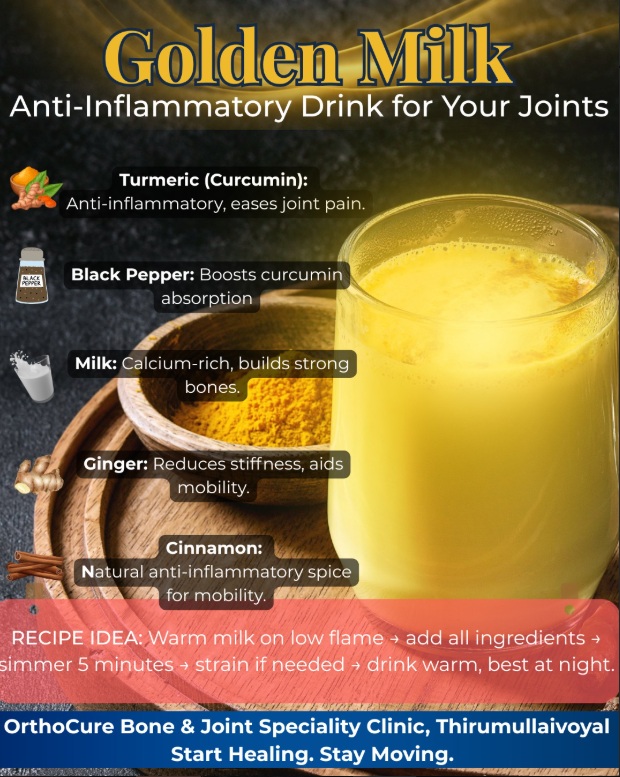
Golden milk is traditionally consumed as part of a healthy routine. Any potential benefits vary between individuals and do not replace medical evaluation.
What is golden milk?
Golden milk, also called turmeric milk, is warm milk mixed with turmeric and sometimes ginger, cinnamon, and black pepper. In many Indian homes it is taken at night for comfort, recovery, and routine wellbeing.
In recent years it has been promoted as an “anti inflammatory” drink. Medical research does suggest turmeric’s active compound, curcumin, has anti inflammatory and antioxidant effects. But how much that translates into meaningful joint improvement depends on dose, absorption, and the actual cause of your symptoms.
What your cup contains, and why it matters
- Turmeric (curcumin): studied for inflammation modulation and antioxidant activity.
- Black pepper: improves curcumin absorption in the gut.
- Milk: provides protein and calcium, useful for overall bone and muscle health.
- Ginger and cinnamon: traditionally used for digestion and comfort. Evidence varies by preparation and dose.
What medical research suggests, in practical terms
Curcumin has been studied in people with osteoarthritis and inflammatory pathways. Some trials show small to moderate improvements in pain and function, especially when curcumin is taken as a standardized supplement with improved absorption. Food based turmeric tends to provide lower doses, so expectations should stay realistic.
- Effects, if present, are usually mild and gradual.
- Absorption from food is limited compared with medical formulations.
- Dietary measures do not correct structural problems like cartilage loss, instability, or nerve compression.
Can golden milk help joint pain or stiffness?
Some people report comfort, especially when symptoms are mild, or when there is generalized muscle soreness and poor sleep. Warmth and a calming night routine may also help sleep quality, which indirectly supports pain tolerance.
Golden milk should not be expected to:
- Reverse arthritis.
- Heal cartilage damage.
- Replace physiotherapy, guided exercise, or injections when indicated.
- Eliminate the need for medical evaluation.
Who should be cautious?
Most healthy adults can take golden milk in moderation. Caution is reasonable if you have gall bladder disease, a history of kidney stones, bleeding disorders, or if you are on blood thinners. If you are diabetic, watch added sugar or sweeteners.
Bone health matters too
If you are using golden milk for “bone strength,” remember: bone health depends on many factors including activity, sunlight exposure, vitamin D status, protein intake, and fall risk reduction. You may also find this useful: Sunlight and vitamin D in Chennai.
When should you see an orthopaedic doctor?
If pain or stiffness lasts beyond two to three weeks, keeps returning, limits walking or sleep, or is associated with swelling, locking, giving way, or numbness, it is worth getting assessed. Early evaluation often prevents unnecessary fear, unnecessary scans, and delayed recovery.
If you have persistent knee pain, shoulder stiffness, or spine related discomfort, it is better to get a proper assessment and a conservative first plan.
Explore: Knee arthritis care and Spine and neck pain clinic.
Related reading
Educational content only. Food and lifestyle measures vary in effect between individuals. Any diagnosis or treatment decision should be made after consultation and examination by Dr Sumesh Subramanian at OrthoCure Bone & Joint Speciality Clinic, Thirumullaivoyal.