Can PRP Delay Knee Replacement?
Here's What Current Research Really Shows
The Short Answer
- ✅ PRP may reduce pain.
- ✅ PRP may improve function.
- ✅ It is generally considered safe.
- ❌ It has not been proven to regrow cartilage.
- ❌ It cannot replace knee replacement in every patient.
- ⚠ Careful patient selection is more important than the injection itself.
One of the biggest misconceptions I encounter is that patients believe the injection itself determines success. In reality, the success of PRP is often decided before the injection is even given. Choosing the right patient matters far more than choosing the injection.
Who This Guide Is For
This guide is intended for people who:
- Have been diagnosed with knee osteoarthritis.
- Are considering PRP injections.
- Want to understand whether PRP can delay knee replacement.
- Want balanced, evidence-based information rather than marketing claims.
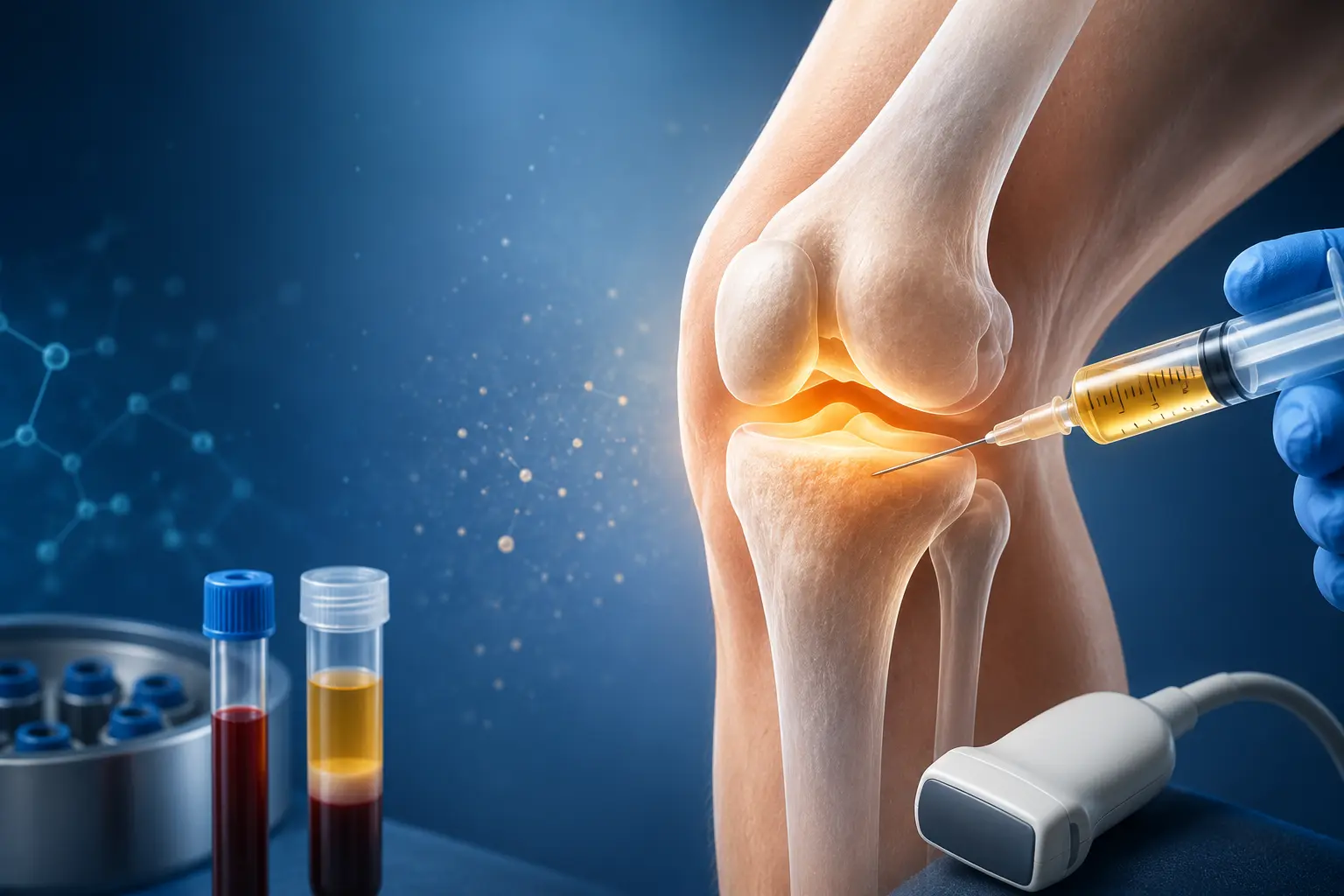
What Exactly Is PRP?
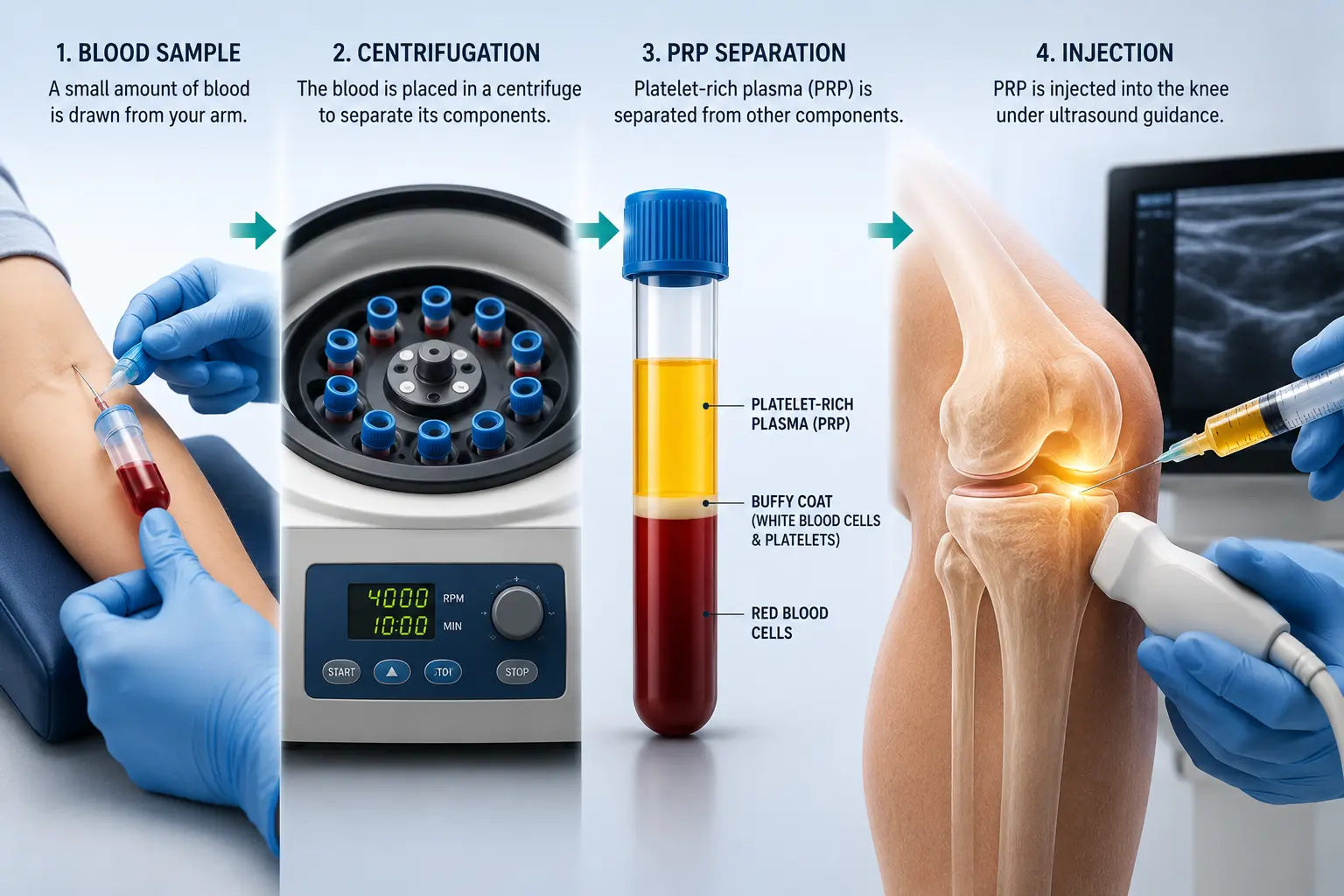
Platelet-Rich Plasma (PRP) is a treatment prepared from your own blood. A small sample of blood is drawn from your arm and spun in a centrifuge to concentrate platelets. These platelets contain growth factors and signalling proteins that may help reduce inflammation and improve the joint environment in carefully selected patients with knee osteoarthritis.
Unlike steroid injections or hyaluronic acid, PRP does not introduce an external drug into the knee. Instead, it uses components already present in your bloodstream. This is why PRP is considered an autologous treatment.
Clinical Pearl
One of the commonest misconceptions is that PRP "creates new cartilage." Current scientific evidence does not support that claim. The primary benefit of PRP appears to be symptom improvement in selected patients rather than proven cartilage regeneration.
How Does PRP Work?
Researchers believe PRP works by changing the environment inside an arthritic knee rather than repairing worn cartilage directly. Growth factors released from concentrated platelets may help reduce inflammation, improve communication between cells and reduce pain in some patients.
This is an area of ongoing research. Although laboratory studies have shown promising biological effects, human clinical studies have not consistently demonstrated structural regeneration of cartilage.
Important
Feeling less pain after a PRP injection does not necessarily mean the arthritis has stopped progressing. Pain relief and disease modification are two different outcomes.
Current Evidence at a Glance
| Question | Current Evidence |
|---|---|
| Can PRP reduce knee pain? | ✅ Yes, in many patients with mild to moderate knee osteoarthritis. |
| Can PRP improve knee function? | ✅ Supported by several meta-analyses. |
| Is PRP generally safe? | ✅ Yes. Because it uses your own blood, serious complications are uncommon. |
| Can PRP regrow cartilage? | ❌ Current evidence does not convincingly demonstrate cartilage regeneration. |
| Can PRP delay knee replacement? | ⚠ Possibly in selected patients, but current evidence remains inconclusive. |
| Does PRP work for everyone? | ❌ No. Careful patient selection is essential. |
What Current Research Generally Supports
- PRP can improve pain in carefully selected patients.
- PRP can improve physical function.
- Medium-term results are often superior to hyaluronic acid.
- The treatment has a good safety profile.
What Current Research Has NOT Proven
- PRP reliably regenerates cartilage.
- PRP permanently stops arthritis progression.
- PRP prevents knee replacement in every patient.
- Every patient with knee arthritis benefits equally.
I do not recommend PRP simply because it is available. I recommend it only when I believe the stage of arthritis, the patient's goals and the available evidence suggest there is a reasonable chance of meaningful benefit.
Can PRP Delay Knee Replacement?
This is perhaps the most important question surrounding PRP today. Unfortunately, the answer is not a straightforward yes or no. Current research presents a mixed picture.
Several systematic reviews have shown that PRP can improve pain and function compared with hyaluronic acid. However, the highest-quality randomized trial (the RESTORE trial) did not demonstrate a significant reduction in cartilage loss or superior pain relief compared with placebo over 12 months.
Why do studies reach different conclusions? The answer lies in how PRP is prepared, which patients are selected, how advanced their arthritis is, and which outcomes are measured. Some studies focus on pain and function, while others evaluate cartilage preservation using MRI.
Why the Evidence Appears Conflicting
- Different PRP preparation techniques.
- Different platelet concentrations.
- Leukocyte-rich versus leukocyte-poor PRP.
- Different stages of arthritis.
- Different numbers of injections.
- Different follow-up periods.
These differences make it difficult to compare studies directly and explain why international guidelines are not completely aligned.
The RESTORE Trial: Why Everyone Talks About It
Published in JAMA in 2021, the RESTORE Trial is considered one of the highest-quality studies evaluating PRP for knee osteoarthritis. Unlike many earlier studies, it compared PRP with a placebo injection and also measured cartilage volume using MRI.
Key Findings
- No significant difference in cartilage volume loss compared with placebo.
- No clinically important difference in pain at 12 months.
- Did not support PRP as a proven disease-modifying treatment.
Clinical interpretation: The RESTORE trial reminds us that symptom improvement alone should not be interpreted as evidence that arthritis has stopped progressing.
What Do Meta-analyses Show?
When results from multiple randomized controlled trials are combined, the picture becomes more encouraging. Several meta-analyses have reported better pain relief and improved function with PRP compared with hyaluronic acid, particularly over six to twelve months.
| Evidence Source | Main Message | Clinical Relevance |
|---|---|---|
| Belk et al. (2021) | PRP improved pain and function compared with HA. | Supports PRP for symptom control. |
| Tan et al. (2021) | PRP outperformed HA in pooled RCTs. | Medium-term symptomatic benefit. |
| Hohmann et al. (2020) | Better WOMAC and VAS scores at 6–12 months. | Moderate support for clinical improvement. |
Improving pain is meaningful. Patients care about walking comfortably, climbing stairs and sleeping through the night. However, symptom improvement should not be confused with reversal of arthritis. Those are two very different goals.
What Do International Guidelines Say?
| Guideline | Position on PRP |
|---|---|
| AAOS (2021) | Limited recommendation. PRP may reduce pain and improve function, but evidence remains inconsistent. |
| ESSKA ORBIT (2022) | Supports PRP for carefully selected patients with mild to moderate knee osteoarthritis. |
| OARSI (2019) | Recommended against routine use because evidence certainty was considered low. |
Bottom Line
There is broad agreement that PRP can improve symptoms in selected patients. There is no broad agreement that PRP reliably regenerates cartilage or consistently delays knee replacement.
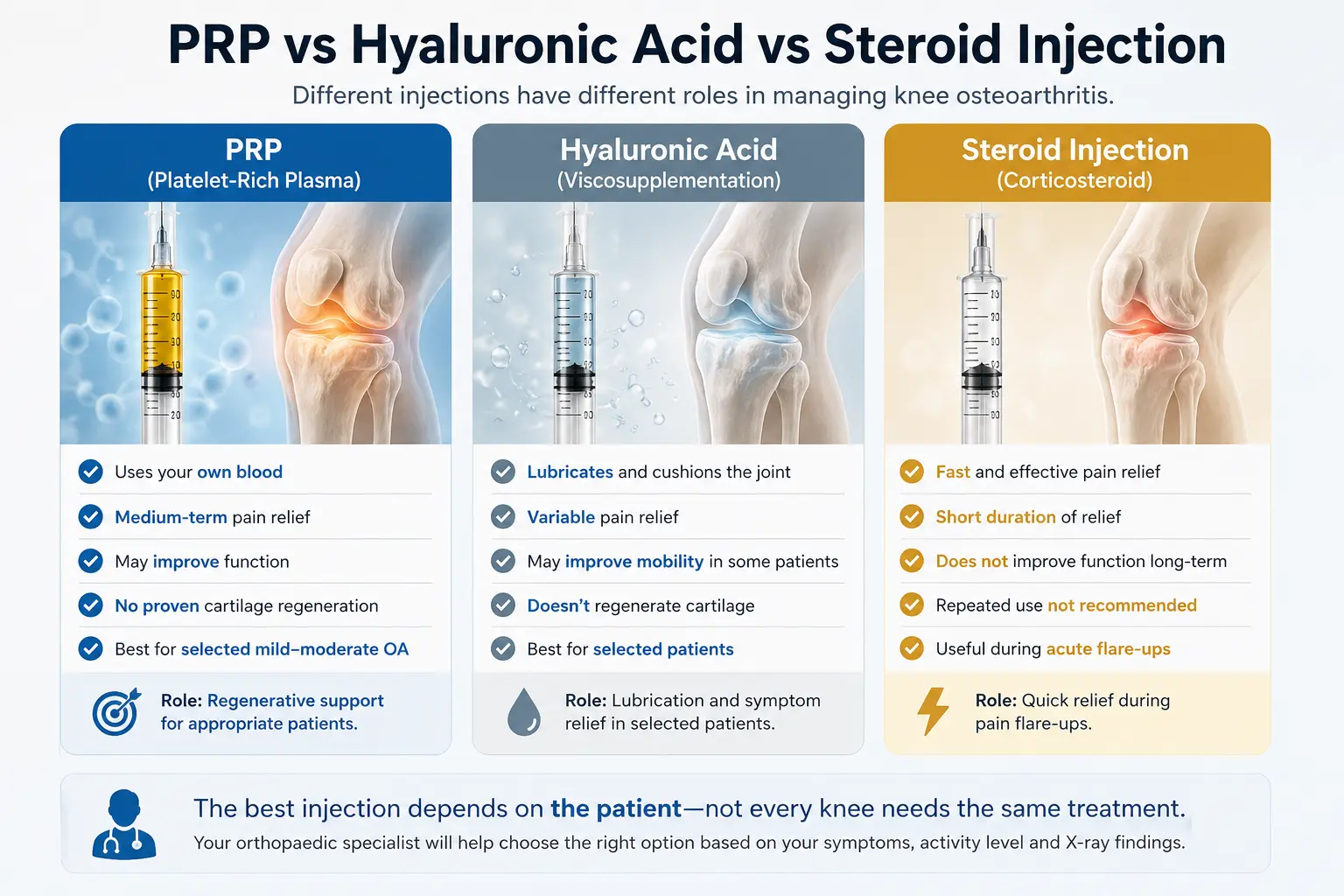
PRP vs Hyaluronic Acid vs Steroid Injection
| Feature | PRP | Hyaluronic Acid | Corticosteroid |
|---|---|---|---|
| Pain relief | Often medium-term | Variable | Usually short-term |
| Function | Often improves | May improve | Temporary improvement |
| Duration | Commonly 6–12 months* | Variable | Weeks to a few months |
| Best role | Selected mild-to-moderate OA | Selected patients | Acute symptom flare |
*Duration varies between studies and individual patients.
Who Is Most Likely to Benefit from PRP?
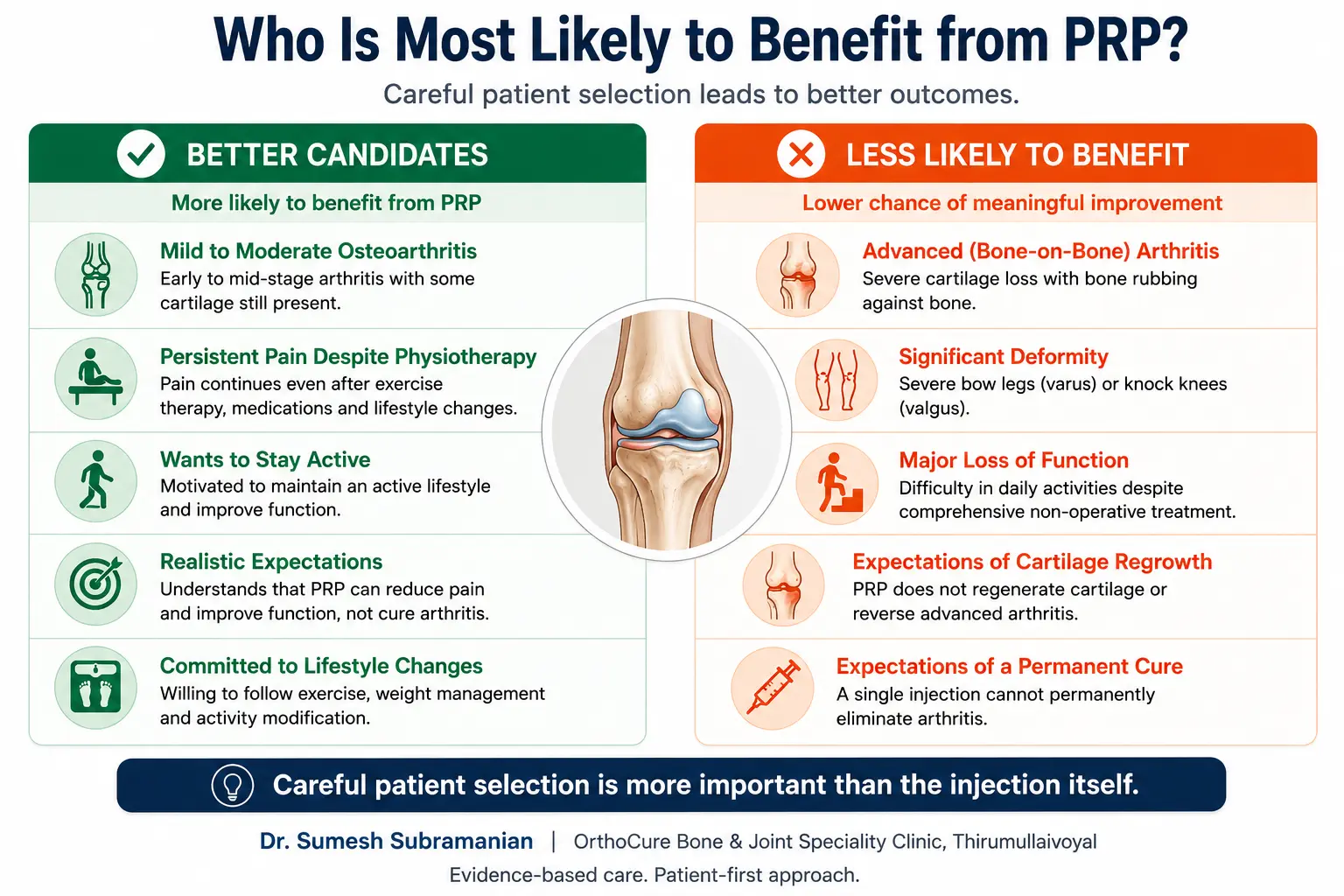
One of the most important messages from current research is that patient selection matters more than the injection itself. PRP is not a one-size-fits-all treatment. The same injection can produce meaningful improvement in one patient and very little benefit in another.
The Patients I Commonly Consider for PRP
- ✅ Mild to moderate knee osteoarthritis (typically Kellgren-Lawrence grades 1–3).
- ✅ Persistent pain despite exercise, weight management and medicines.
- ✅ Patients wishing to delay more invasive procedures where appropriate.
- ✅ Individuals with realistic expectations who understand that PRP is intended to improve symptoms, not cure arthritis.
- ✅ Patients committed to continuing physiotherapy and strengthening exercises.
| Patient Factor | Current Evidence | Clinical Interpretation |
|---|---|---|
| Severity of arthritis | Strongest evidence supports mild–moderate disease. | Best predictor of a favourable response. |
| Age | Earlier studies favoured younger patients, but recent high-quality evidence is inconsistent. | Age alone should not determine treatment. |
| BMI | No consistent evidence that BMI predicts PRP success. | Weight loss remains important for overall knee health. |
| Activity level | Possible association with better outcomes, but evidence is limited. | Exercise remains an essential part of treatment. |
When I assess a patient for PRP, I am not simply deciding whether to give an injection. I am assessing whether that individual has the right stage of arthritis, realistic expectations and a reasonable chance of benefiting from it.
Who Is Unlikely to Benefit Significantly?
PRP should not be viewed as a replacement for knee replacement surgery in every patient. In advanced arthritis, the biological environment of the joint may no longer respond sufficiently to platelet-derived growth factors.
PRP May Be Less Helpful If You Have:
- ❌ Advanced bone-on-bone knee arthritis.
- ❌ Significant deformity such as severe bow legs or knock knees.
- ❌ Major loss of function despite comprehensive non-operative treatment.
- ❌ Expectations that cartilage will completely regrow.
- ❌ Expectations that a single injection will permanently eliminate arthritis.
When Is Knee Replacement Still the Better Option?
One of the biggest concerns patients have is that choosing surgery means they have somehow "failed" conservative treatment. That is not the case.
The goal of treatment is always to improve your quality of life. If pain remains severe despite appropriate non-operative care, Knee replacement surgery may provide the most reliable and durable improvement.
Signs That Knee Replacement May Be the Better Choice
- Persistent pain affecting everyday activities.
- Difficulty walking even short distances.
- Night pain disturbing sleep.
- Failure of structured conservative treatment.
- Advanced arthritis confirmed on clinical assessment and imaging.
My goal is never to recommend surgery too early, but equally, I do not want patients to spend years pursuing treatments that are unlikely to restore meaningful function. The right treatment is the one that matches the stage of arthritis and your individual goals.
Patient Decision Checklist
Before deciding on PRP, ask yourself the following questions:
- ☐ Has my arthritis been properly staged?
- ☐ Have I tried structured exercise and physiotherapy?
- ☐ Do I understand what PRP can and cannot do?
- ☐ Am I hoping for symptom improvement rather than a cure?
- ☐ Would I still consider knee replacement if symptoms continue to worsen?
Remember
The best treatment plan is rarely based on a single X-ray or MRI report. It should combine your symptoms, examination findings, imaging and personal goals.
If you're interested in how treatment decisions are made for other common orthopaedic conditions, you may also like our article on whether a disc bulge on MRI always requires surgery .
Frequently Asked Questions
1. Can PRP completely cure knee arthritis?
No. PRP is intended to improve symptoms in selected patients. Current evidence does not support PRP as a cure or a treatment that completely reverses arthritis.
2. Can PRP regrow cartilage?
Current human studies have not convincingly demonstrated cartilage regeneration. Most benefits relate to pain relief and improved function.
3. How long does PRP last?
Many studies report symptomatic benefit lasting around 6–12 months, although results vary considerably between patients.
4. Is one injection enough?
Protocols differ between studies. Some use a single injection, while others use two or three injections. The optimal protocol remains uncertain.
5. Is PRP better than steroid injections?
For selected patients with mild to moderate knee osteoarthritis, PRP may provide longer-lasting symptom relief than corticosteroid injections, although steroids still have an important role in selected clinical situations.
6. Is PRP better than hyaluronic acid?
Several meta-analyses suggest PRP provides better medium-term symptom relief than hyaluronic acid in selected patients.
7. Is PRP safe?
Because PRP is prepared from your own blood, serious adverse reactions are uncommon. Temporary pain or swelling after the injection may occur.
8. Who should avoid PRP?
Patients with advanced bone-on-bone arthritis, severe deformity or unrealistic expectations are less likely to achieve meaningful benefit.
9. When should knee replacement be considered?
If pain, stiffness and loss of function continue despite appropriate conservative treatment, knee replacement may provide the most reliable improvement in quality of life.
10. How do I know whether PRP is right for me?
The decision should be based on your symptoms, examination findings, imaging, stage of arthritis and treatment goals—not on advertisements or social media alone.
Key Takeaways
- PRP is one treatment option—not a miracle cure.
- Current evidence supports symptom improvement in carefully selected patients.
- Cartilage regeneration has not been convincingly proven.
- Evidence that PRP reliably delays knee replacement remains inconclusive.
- Choosing the right patient is more important than choosing the injection.
- Exercise, weight management and physiotherapy remain the foundation of treatment.
Final Thoughts
If you have knee arthritis, it is natural to look for treatments that might help you remain active and postpone surgery. PRP is one option that may reduce pain and improve function in selected patients, particularly during the earlier stages of arthritis.
However, current research also reminds us that no injection is suitable for everyone. The most appropriate treatment depends on your symptoms, examination findings, expectations and lifestyle. If you're unsure which option is right for you, book an appointment for an individual assessment.
As an orthopaedic surgeon, my aim is always to recommend the treatment that is most likely to improve your quality of life—whether that involves exercise, physiotherapy, medication, PRP or, when appropriate, knee replacement surgery.
Need Personalised Advice?
Every knee is different. If you have persistent knee pain and would like to understand whether PRP, physiotherapy or knee replacement is the most appropriate option, a thorough clinical assessment is the best place to start.
Dr. Sumesh Subramanian
MS Orthopaedics
OrthoCure Bone & Joint Speciality Clinic, Thirumullaivoyal
Related Reading
Selected References
- Bennell KL, et al. Effect of intra-articular platelet-rich plasma vs placebo injection on pain and medial tibial cartilage volume in patients with knee osteoarthritis. JAMA. 2021.
- American Academy of Orthopaedic Surgeons. Management of Osteoarthritis of the Knee Clinical Practice Guideline. 2021.
- Belk JW, et al. Platelet-rich plasma versus hyaluronic acid for knee osteoarthritis: Systematic review and meta-analysis. Am J Sports Med. 2021.
- Tan J, et al. Platelet-rich plasma for knee osteoarthritis: Meta-analysis of randomized trials. Arthroscopy. 2021.
- ESSKA ORBIT Consensus. 2022.
- Hohmann E, et al. Eur J Orthop Surg Traumatol. 2020.
- Sánchez M, et al. Int Orthop. 2021.
- OARSI Guideline for the Non-Surgical Management of Knee Osteoarthritis. 2019.